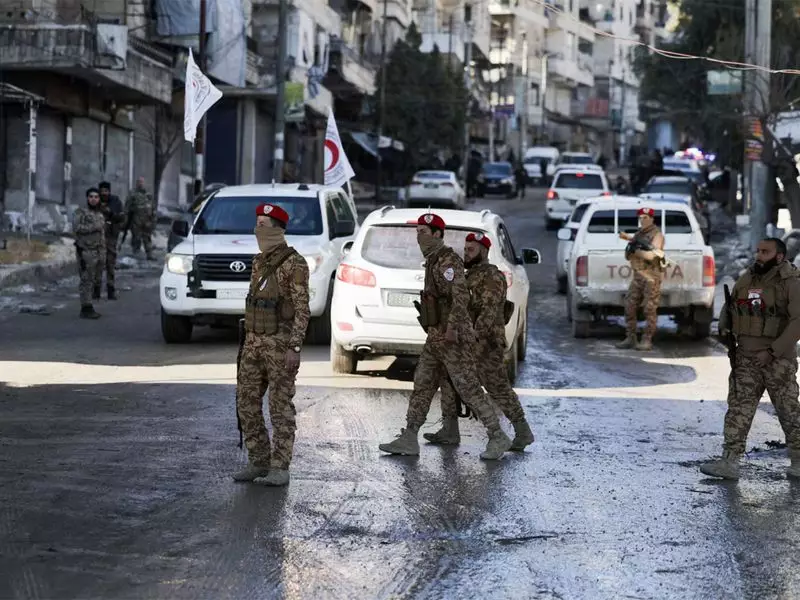
A fragile ceasefire agreement, mediated by the United States, has taken effect in northern Syria, leading to the withdrawal of Kurdish-led fighters from the strategic city of Aleppo. This development follows a series of intense and deadly clashes that threatened to escalate into a wider regional conflict.
Details of the Ceasefire and Withdrawal
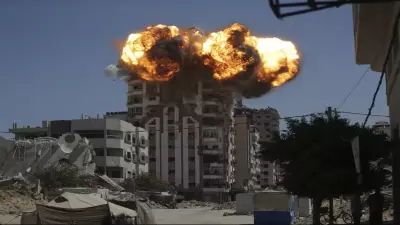
The agreement was reached after violent confrontations erupted on Sunday between the Kurdish-led Syrian Democratic Forces (SDF) and pro-Iranian militias. These clashes, centered in the Sheikh Maqsoud neighborhood of Aleppo, resulted in significant casualties. Reports indicate that at least 10 SDF fighters lost their lives, while the opposing side, which included members of the Iraqi Hezbollah and other Iran-backed groups, also suffered losses.
As part of the truce terms, SDF fighters began their withdrawal from their positions in Aleppo on Monday. Their exit paves the way for the Syrian government's army and allied Russian military police to move in and assume control of the contested areas. This shift effectively restores state authority over a key district that had been under Kurdish administration for years.

Roots of the Conflict and Broader Implications
The recent violence did not occur in a vacuum. Tensions have been simmering for months, primarily driven by repeated attacks by Iran-backed militias on US bases in Syria. The United States holds these groups responsible for a drone strike in January that killed three American soldiers at a base in Jordan. In response, Washington has conducted targeted airstrikes against militia positions in both Syria and Iraq.
The Sheikh Maqsoud neighborhood, a predominantly Kurdish area, became a flashpoint. Pro-Iranian factions reportedly shelled the district, accusing the SDF of collaborating with American forces. The SDF, which played a crucial role in defeating the Islamic State with US support, denied these allegations but found itself caught in the crossfire of a larger proxy struggle.
The ceasefire deal, while halting immediate hostilities, underscores the complex and volatile power dynamics in Syria. It highlights the ongoing competition for influence between international and regional actors, including the US, Russia, Iran, and Turkey, often playing out through local armed groups. The withdrawal of the SDF from Aleppo marks a significant realignment of control in one of Syria's most important cities.
What Comes Next for Syria?
While the immediate threat of large-scale fighting in Aleppo has subsided, the underlying causes of the conflict remain unresolved. The presence of multiple foreign armies and militias continues to make Syria a tinderbox. The agreement may prevent a localized battle from spiraling, but it does not address the broader geopolitical rivalries fueling the instability.
Analysts warn that the situation remains precarious. The deal's success hinges on the commitment of all armed factions to respect the truce. Furthermore, the long-term status of Kurdish-administered areas in northern Syria, a core issue for the SDF, is still a major point of contention with the Syrian government in Damascus and Turkey.
For now, residents of Aleppo hope the ceasefire holds, offering a respite from the violence that has plagued their city for over a decade. The world watches to see if this arrangement is a temporary fix or a step toward a more durable, though complex, political solution for Syria's fractured landscape.