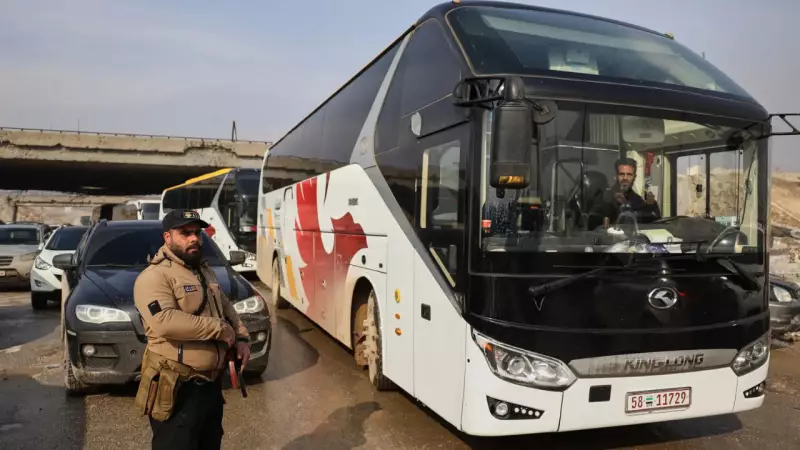
The Syrian military announced on Saturday that it had completed a security operation in the Sheikh Maqsud neighbourhood of Aleppo, following intense fighting with Kurdish-led forces. However, Kurdish officials immediately rejected the claim as false, stating that combat was still ongoing in the area, marking a significant escalation in Syria's second city.
Conflicting Claims Amid Ongoing Violence
According to the Syrian army statement, forces finished a full security sweep of Sheikh Maqsud, the last part of Aleppo held by Kurdish fighters. The military urged residents to stay indoors, citing the continued presence of Kurdish combatants. A source told the state-run SANA news agency that a number of SDF members were arrested during the operation.
Kurdish forces, represented by the Syrian Democratic Forces (SDF), countered these assertions. They labelled the government's announcement "false and misleading" and reported that street fighting persisted against what they called "government militias." The SDF accused Syrian forces of "systematic criminal conduct aimed at spreading terror" through artillery bombardment.

Ceasefire Breach and Civilian Toll
The violence erupted after a deadline for Kurdish fighters to withdraw from the district expired during a brief ceasefire. Government strikes began overnight, with gunfire reported by AFP correspondents well into Saturday morning. The clashes have killed at least 21 civilians, according to figures cited by both sides, and prompted tens of thousands of residents to flee Aleppo, carrying their belongings.
This is among the most severe outbreaks of violence since new Islamist authorities took power in Damascus after the ouster of longtime ruler Bashar al-Assad in December 2024. Both sides have blamed each other for initiating the fighting. Authorities also extended a suspension of flights at Aleppo airport until late Saturday.
Stalled Talks and International Reaction
The fighting underscores the deadlock in talks to integrate the Kurds' autonomous administration and their military forces into Syria's new government. A March integration agreement, meant for implementation last year, stalled over disagreements including Kurdish demands for decentralised governance.
Elham Ahmad, a senior Kurdish official, accused Damascus of "choosing the path of war" and seeking to end previous agreements. She told AFP that "the United States is playing a mediating role" and expressed hope for US pressure to reach a deal.
US envoy Tom Barrack discussed the crisis with Jordan's foreign minister on Saturday, with both supporting consolidating the ceasefire and ensuring the peaceful withdrawal of the SDF from Aleppo. The United Nations voiced deep concern, with spokesperson Stephane Dujarric urging all parties to "swiftly return to negotiations."
Analyst Nanar Hawach of the International Crisis Group warned that the renewed clashes raise doubts about the government's ability to reunify the country after 14 years of civil war, potentially worrying international actors about Damascus's capacity to govern Syria's diverse society.
The SDF controls large parts of Syria's oil-rich north and was instrumental in defeating the Islamic State group in 2019. Turkey, an ally of Syria's new leadership, views the SDF's main component as a terrorist extension and has historically launched operations against it.