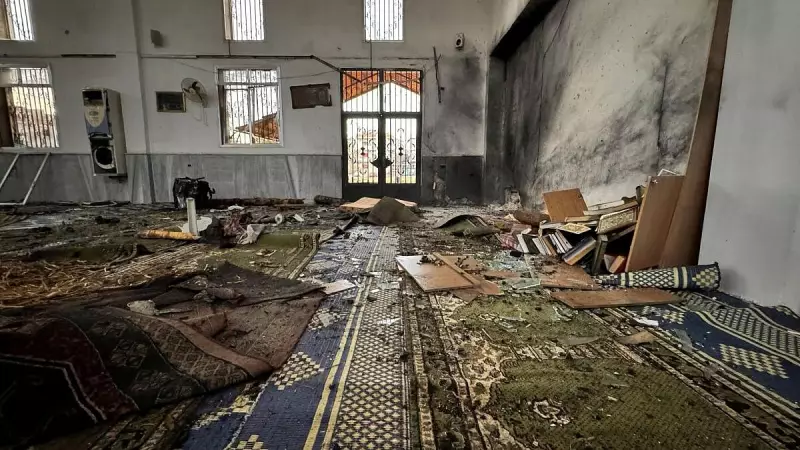
A powerful explosion struck a mosque in the Syrian city of Homs on Friday, resulting in a tragic loss of life and raising immediate concerns about a resurgence of sectarian tensions in the war-torn country. The blast targeted a place of worship for the Alawite community, a Muslim sect to which Syria's ruling elite belongs.
Details of the Deadly Attack
The incident occurred at the Al-Zahraa Mosque in the Akrama neighbourhood of Homs. Syrian state media, citing the interior ministry, confirmed the devastating toll. According to official reports, at least eight people were killed in the explosion. Furthermore, the attack left more than two dozen individuals injured, with some in critical condition.
Preliminary information suggests the explosion was caused by an improvised explosive device (IED) that had been planted inside the mosque. The device detonated during Friday prayers, a time when the mosque would have been crowded with worshippers, maximising the impact of the attack. Security forces swiftly cordoned off the area as emergency services rushed to the scene to evacuate the wounded and manage the aftermath.

Context and Immediate Aftermath
Homs, often referred to as the "capital of the revolution," was a key battleground in the early years of the Syrian conflict. While the city has been under government control since 2017 after fierce fighting, it remains a symbol of the country's deep divisions. The Akrama neighbourhood is a predominantly Alawite area, making the choice of target highly significant and potentially sectarian in nature.
No group immediately claimed responsibility for the bombing. However, such attacks on minority communities have historically been a tactic employed by extremist factions like the Islamic State (ISIS), which once held territory in parts of Syria. The explosion has sent shockwaves through the community, reviving fears of instability despite the relative calm in government-held areas in recent years.
Broader Implications and Reactions
This attack underscores the fragile security situation in Syria, even in regions ostensibly secured by President Bashar al-Assad's forces. It highlights the persistent threat of militant cells capable of carrying out devastating strikes. The targeting of a religious site is particularly alarming, as it threatens to inflame sectarian sentiments that have fueled over a decade of brutal conflict.
The Syrian government condemned the act as a "terrorist bombing" aimed at sowing discord. The incident serves as a grim reminder that the Syrian conflict, which has claimed hundreds of thousands of lives and displaced millions, is far from resolved. The underlying political and sectarian grievances continue to simmer, capable of erupting into violence at any moment. The international community watches with concern as this attack could represent a dangerous new chapter in the country's long-running tragedy.
As investigations continue, the focus remains on identifying the perpetrators and understanding the full network behind this act. For the residents of Homs and Syria at large, the explosion at the Al-Zahraa Mosque is a painful setback in their quest for lasting peace and security.