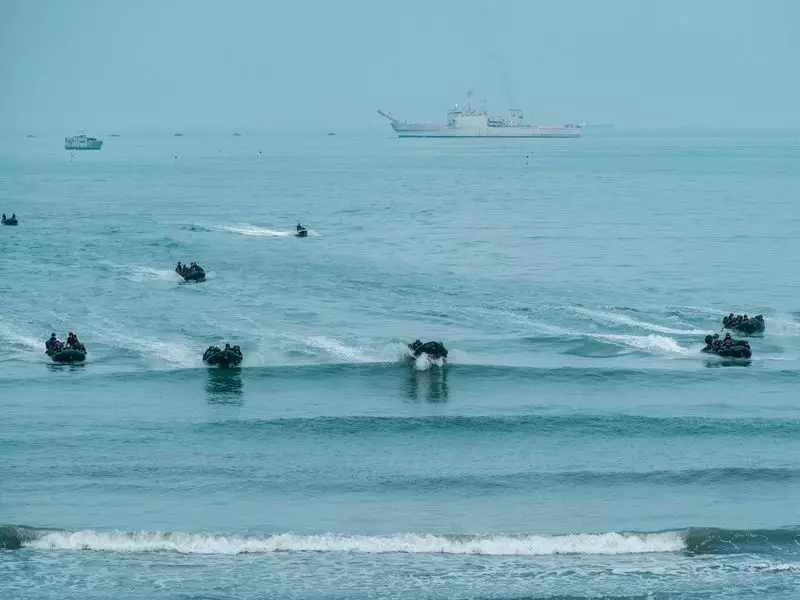
Taiwan's military forces have once again detected a significant presence of Chinese military assets operating in the vicinity of the island, marking the latest in a series of regular incursions. The Ministry of National Defence (MND) in Taipei reported tracking three People's Liberation Army (PLA) aircraft and eight People's Liberation Army Navy (PLAN) vessels around Taiwan's territory on a recent day.
Details of the Military Movements
According to the official statement released by Taiwan's defence ministry, the activity was monitored between 6 am on a specific day and 6 am the following day. The ministry's real-time monitoring systems successfully identified the composition of the forces. Out of the three detected PLA aircraft, it was confirmed that one entered Taiwan's southwestern Air Defence Identification Zone (ADIZ). The ADIZ is an area where Taiwan demands that foreign aircraft identify themselves, though it is not part of its territorial airspace.
In response to this incursion, Taiwan's armed forces, the Republic of China Armed Forces (ROCArmedForces), took standard defensive measures. These protocols typically involve the deployment of combat air patrol aircraft, the activation of land-based missile systems, and the use of radio warnings to monitor and respond to the situation.

Context of Rising Cross-Strait Tensions
This event is not an isolated incident but part of a persistent pattern of military pressure from Beijing. China, which views the self-ruled island of Taiwan as a breakaway province that must eventually be reunited with the mainland, has significantly increased such operational activities in recent years. These manoeuvres are widely interpreted as demonstrations of force aimed at asserting China's sovereignty claims and discouraging what Beijing perceives as moves toward formal independence by Taiwan.
The regular transit of Chinese warships and flights near the median line of the Taiwan Strait has become a common tactic. This unofficial buffer zone was historically respected by both sides but has been frequently breached by PLA forces in a show of strength. The consistent presence serves as a constant reminder of the military threat Taiwan faces from its much larger neighbour.
Regional Implications and Responses
The persistent military activity around Taiwan has raised concerns far beyond the island's shores. The Taiwan Strait is a critical global shipping lane, and any conflict would have severe repercussions for international trade and regional stability. Major powers, including the United States and Japan, have repeatedly called for peace and stability in the strait. The US, in particular, maintains a policy of strategic ambiguity and continues to provide Taiwan with defensive weapons, a point of major contention in Sino-US relations.
Taiwan's government, led by the Democratic Progressive Party (DPP), has consistently called for the international community to pay attention to these actions, which it describes as destabilising. The island's defence strategy has shifted towards asymmetric warfare, focusing on mobile and cost-effective systems to deter a potential invasion, while continuing to rely on timely intelligence and monitoring of all PLA movements.
For now, the situation remains a tense standoff. Each sortie by Chinese forces is met with vigilant monitoring and a calibrated response from Taiwan's military. This latest detection of three aircraft and eight vessels underscores that the military pressure on Taiwan is a continuous reality, serving as a potent tool in Beijing's broader campaign to shape the political environment across the strait without triggering a full-scale conflict.