

Taiwan's military forces have reported a significant presence of Chinese military assets in the vicinity of the island, marking the latest episode in a series of such activities that have heightened regional tensions. The Ministry of National Defence (MND) in Taipei announced on Sunday that it had detected multiple People's Liberation Army (PLA) platforms operating around Taiwanese territory.
Details of the Military Incursion
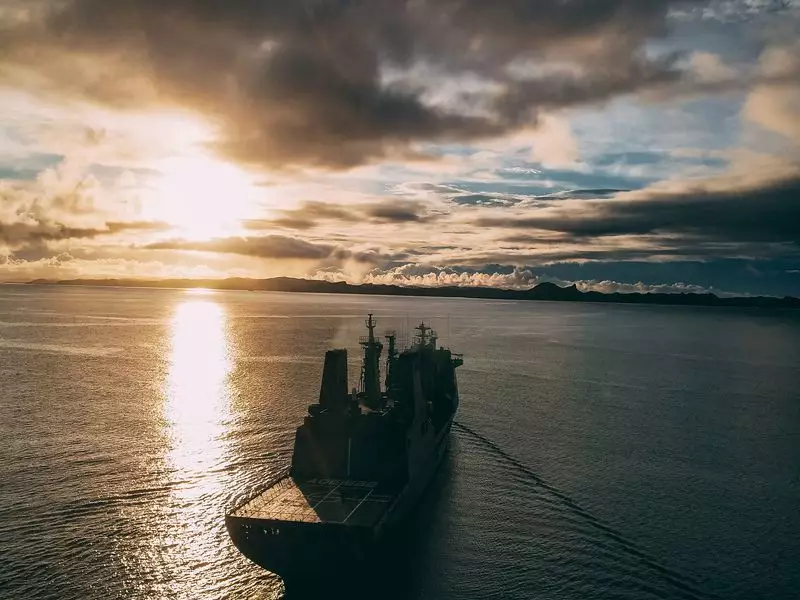
According to the official statement released by Taiwan's defence authorities, a total of nine Chinese military aircraft were tracked. Alongside the aerial assets, eight naval vessels belonging to the PLA Navy were also observed operating in the waters surrounding Taiwan. The surveillance and monitoring were conducted within a 24-hour period leading up to 6 a.m. on Sunday.
The ministry noted that four of the nine detected aircraft crossed the median line of the Taiwan Strait, an unofficial boundary that has traditionally served as a tacit buffer between the two sides. This act of crossing the line is viewed as a particularly provocative move, challenging the status quo. Furthermore, the aircraft entered Taiwan's southwestern Air Defence Identification Zone (ADIZ), an area where foreign aircraft are expected to identify themselves.

Taiwan's Response and Regional Context
In response to the incursion, Taiwan's armed forces, officially known as the Republic of China Armed Forces, took standard defensive measures. The military deployed aircraft, naval ships, and coastal-based missile systems to monitor the situation closely. Their stated mission was to ensure the security of Taiwan's sovereign airspace and territorial waters, responding to the perceived threat with a posture of vigilance.
This event is not an isolated incident but part of a persistent pattern of increased Chinese military activity near Taiwan. Beijing claims the self-ruled island as part of its territory, despite Taiwan's functional independence and democratic governance. The Chinese government has never renounced the use of force to achieve what it calls "reunification." Consequently, such military manoeuvres are widely interpreted as demonstrations of strength and political pressure aimed at Taipei.
Implications for Regional Stability
The regular appearance of PLA assets around Taiwan significantly raises the risk of accidental clashes or miscalculations. Every incursion necessitates a response from Taiwanese forces, creating a volatile environment where a minor error could escalate rapidly. The international community, particularly other nations in the Indo-Pacific region and the United States, watches these developments with growing concern.
These operations underscore the ongoing and serious tensions in the Taiwan Strait, one of the world's most critical geopolitical flashpoints. They occur against a backdrop of broader Chinese military modernisation and assertiveness in the South China Sea and East China Sea. For Taiwan, the constant surveillance and pressure reinforce the need for a robust self-defence capability and strong international partnerships to deter potential aggression.
The latest detection serves as a stark reminder that the delicate peace in the region remains under constant strain, with military posturing from Beijing continuing to be a primary tool for signalling its intentions regarding Taiwan's future.






