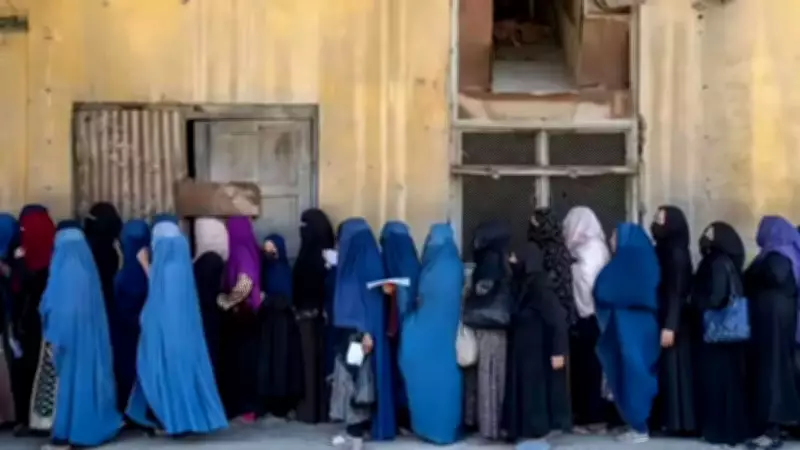
The Taliban has drawn sharp criticism after formally recognizing a new divorce law in Afghanistan that effectively legitimizes child marriage and restricts women from seeking divorce without their husband's consent. Activists have labeled the move as shameful, warning that it could further erode women's freedoms in the country.
Details of the New Law
The 31-article regulation, titled 'Principles of Separation Between Spouses,' outlines rules covering child marriage, missing husbands, forced separation, apostasy, accusations of adultery, and other religious and legal matters. One of the most controversial provisions states that the silence of a 'virgin girl' after reaching puberty may be interpreted as consent to marriage. The regulation says silence by a boy or a previously married woman, however, would not automatically count as consent. Under the new law, a woman cannot seek divorce solely on the grounds that her husband is missing or has failed to provide financial support.
Protests and Condemnation
The legislation has triggered protests in Kabul this week, with women's rights groups condemning it as a form of 'institutionalised violence' against women and children. According to The Guardian, there are no official statistics on forced and underage marriage in Afghanistan, but activists claim that it has risen at an alarming rate in recent years, driven by the ban on girls being in education after the age of 11. As there has been no ban on child marriage in Afghanistan, almost 70% had been pushed into early or forced marriage, and 66% of these marriages involved girls under the age of 18.

'After issuing hundreds of anti-women decrees, the Taliban are now attempting to institutionalise child marriage within the formal legal structure,' said activist Fatima, as reported by The Guardian. 'Instead of ensuring security and justice, the Taliban are occupied with issuing shameful misogynistic decrees and suppressing human freedoms,' she added.
International Reactions
Expressing concern over the legislation, Georgette Gagnon of the UN Assistance Mission (UNAMA) said, 'The new law was part of a broader and deeply concerning trajectory in which the rights of Afghan women and girls are being eroded. It entrenches a system in which Afghan women and girls are denied autonomy, opportunity, and access to justice.'
Rejecting criticism of the legislation, a Taliban spokesperson told Taliban-run National Radio and Television, 'We should pay no attention to the protests of those who are hostile, who have problems with Islam, with religion, and with the foundations of the Islamic system.'
Impact on Women and Girls
Earlier this month, a 15-year-old girl from the Daikundi province of central Afghanistan died after undergoing systematic abuse and violence from her husband, the outlet reported. According to her father, she got married to her cousin eight months ago, but violence began within two months of the marriage. The Afghanistan Human Rights Center reported that most victims of child marriages are vulnerable to domestic violence and severe psychological distress in Afghanistan.