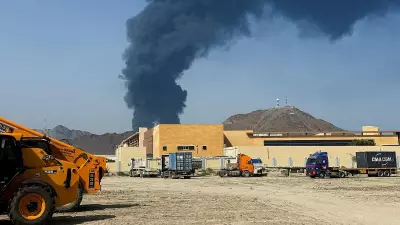
In a significant escalation of long-range strikes, Ukrainian drones targeted the Russian capital, Moscow, and the southern Tula region overnight, leading to an industrial fire and widespread disruptions, according to Russian authorities on Wednesday, December 24, 2025.
Moscow and Tula Under Aerial Assault
Moscow Mayor Sergei Sobyanin reported via the Telegram messaging app that at least three drones aimed at the capital were successfully intercepted and downed by air defences. Emergency services were promptly dispatched to the locations where the debris fell. Sobyanin initially reported no immediate casualties or significant damage from these incidents in Moscow.
The attack wave caused major operational disruptions for air travel. Two of the four main airports serving Moscow were forced to limit their operations, as confirmed by Russia's civil aviation authority on Telegram.

Massive Drone Interceptions and Tula Fire
The Russian defence ministry provided a broader picture of the night's events, claiming that its air defence systems destroyed a total of 172 Ukrainian drones overnight. Notably, nearly half of these interceptions occurred over Russian regions that share a border with Ukraine.
One of the downed drones had consequential fallout in the Tula region, located directly south of Moscow. Tula Governor Dmitry Milyaev stated that falling debris from a destroyed Ukrainian drone ignited a fire at an industrial site. While Milyaev did not specify the nature of the facility, he confirmed that firefighting teams tackled the blaze. He added that Russian defences eliminated 12 drones over the Tula region alone.
Context and Ukraine's Strategic Shift
This large-scale aerial offensive is part of a stepped-up campaign by Ukraine to strike deep inside Russian territory. Ukrainian officials have consistently stated that such attacks target military infrastructure, energy hubs, and logistics networks. The strategic goal is to disrupt and degrade Russia's war-fighting capabilities, a direct response to the relentless missile and drone strikes Russia continues to launch on Ukrainian cities and civilian infrastructure.
The overnight attacks follow another high-profile incident in Moscow just days prior, on December 22, where Lt. Gen. Fanil Sarvarov, head of the Operational Training Directorate of the Russian Armed Forces General Staff, was killed by an explosive device planted under his car, as reported by Russian investigators.
These events underscore the expanding geographical scope of the conflict and Kyiv's growing ability to project force far beyond the front lines, bringing the reality of the war closer to the heart of Russia.