

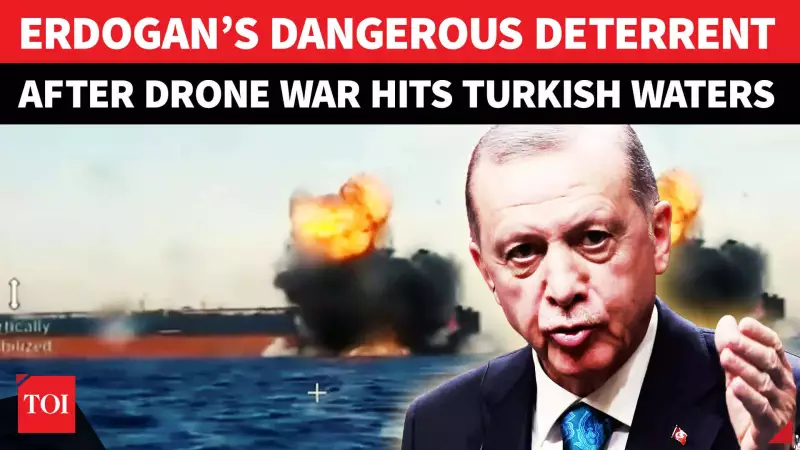
Tensions in the Black Sea have sharply increased following a series of Ukrainian drone strikes targeting Russian oil tankers. The incidents, occurring dangerously close to Turkey's maritime borders, have prompted a stark warning from Ankara about the risk of a major regional escalation.
Turkish President Sounds the Alarm
President Recep Tayyip Erdogan of Turkey publicly condemned the attacks, which struck two vessels identified as part of Russia's so-called "shadow fleet." The strikes took place on November 28 and 29 near Turkey's exclusive economic zone, a critical and sensitive maritime area. Erdogan emphasized that such actions threaten vital shipping lanes and could lead to a dangerous and uncontrolled escalation of the conflict.
Details of the Drone Assaults
According to confirmation from Ankara, the oil tanker Virat was hit twice within a 24-hour period. While the vessel sustained only minor damage and no casualties were reported, the repeated targeting underscores the operation's precision and persistence. The second tanker struck was identified as the Kairos.

Ukrainian security sources, speaking to major international news agencies including CNN and AP, claimed responsibility for the operation. They revealed that the attacks were carried out using domestically produced Sea Baby naval drones. The mission was executed in a coordinated effort involving the Security Service of Ukraine (SBU) and the Ukrainian Navy, targeting ships they describe as part of a sanctioned Russian fleet used to circumvent international oil restrictions.
Implications for Black Sea Security
The direct targeting of oil tankers marks a significant intensification of maritime warfare in the region. The Black Sea is a crucial artery for global trade, especially for energy exports. These strikes not only demonstrate Ukraine's growing naval drone capabilities but also directly challenge Russian maritime logistics and energy revenue.
Turkey's warning carries substantial weight, as it controls access to the Black Sea via the Bosphorus and Dardanelles straits under the Montreux Convention. Ankara has maintained a delicate balancing act throughout the conflict, and this public condemnation highlights its growing concern over the war spilling into its immediate neighbourhood and disrupting crucial commercial waterways.
The incident sets a new precedent for the conflict, moving beyond frontline battles and deep strikes on land to include sustained attacks on Russia's commercial shadow fleet at sea. The international community is now closely watching how Russia will respond and whether this leads to a further militarization of the Black Sea, impacting global energy markets and regional stability.






