

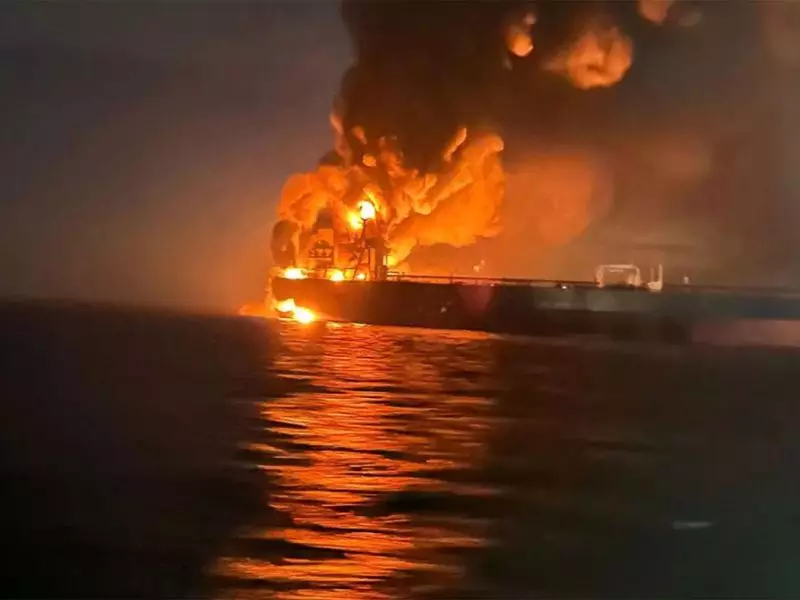
In a bold maritime operation, Ukraine has successfully targeted a significant Russian vessel in the Black Sea. The Security Service of Ukraine (SBU), in collaboration with the nation's naval forces, executed a precise strike on the Russian oil tanker SIG using a sophisticated, domestically-produced sea drone.
The Attack: Details of the Black Sea Strike
The incident occurred under the cover of night on Friday. The Ukrainian forces deployed an unmanned surface vehicle, known as a sea drone, which approached and struck the Russian tanker. The vessel, identified as the SIG, was hit near the Kerch Strait, a strategically vital waterway connecting the Black Sea to the Sea of Azov.
According to a source within the SBU who spoke to Ukrainian media, the attack was carried out with a new model of sea drone named 'Sea Baby'. This particular unmanned vehicle is reported to be unique in its design and capabilities. The source confirmed that the SIG tanker was transporting fuel for Russian military units, making it a legitimate strategic target.

The strike caused significant damage to the tanker's engine room and stern, leaving the vessel incapacitated. While the Russian side reported no casualties, the attack successfully achieved its goal of disrupting logistics and striking a key asset involved in supporting the Russian war effort.
Expanding Ukrainian Naval Capabilities
This operation marks a continued demonstration of Ukraine's growing prowess in asymmetric naval warfare. Since the full-scale invasion began, Ukraine has innovated rapidly, developing sea drones to challenge Russia's traditional naval dominance in the Black Sea.
The use of the 'Sea Baby' drone is particularly notable. Ukrainian officials have stated this model is unlike any other previously seen and can carry a substantial payload of explosives. This attack follows a pattern of successful Ukrainian strikes on Russian naval and logistical assets, including the earlier strike on the Kerch Bridge, which was also reportedly carried out with sea drones.
These tactics have forced the Russian navy to exercise greater caution and have helped Ukraine secure a corridor for its grain exports, despite Moscow's withdrawal from a key UN-brokered grain deal.
Reactions and Strategic Implications
The Russian Federal Agency for Sea and Inland Water Transport confirmed the attack, stating the tanker had 11 crew members onboard at the time, all of whom were reportedly evacuated safely. They attributed the damage to an attack by a Ukrainian sea drone.
This strike carries several important implications for the ongoing conflict:
- Logistical Disruption: Targeting fuel tankers directly impacts Russia's ability to supply its forces in southern Ukraine and Crimea.
- Deterrence Message: It signals to Russia that any vessel, military or civilian, involved in supporting the war effort is vulnerable.
- Control of Waters: It challenges Russia's proclaimed control over key Black Sea shipping lanes and demonstrates Ukraine's ability to project power far from its coast.
The attack underscores the evolving nature of the war, where Ukrainian ingenuity in drone technology continues to level the playing field against a larger conventional force. It also highlights the critical role of the Black Sea as a contested theater, where economic and military pressures are intensely intertwined.
As the conflict persists, such asymmetric naval strikes are likely to continue, shaping the strategic dynamics and potentially influencing broader security calculations in the region.






