

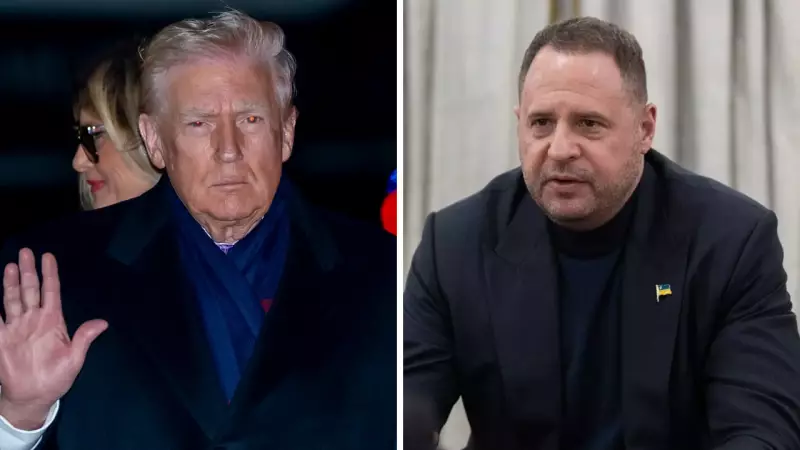
This week's international landscape was shaped by significant diplomatic manoeuvres, internal political shifts, and ongoing geopolitical tensions. Key developments ranged from the unveiling of a controversial peace proposal for Ukraine to a high-profile resignation in Kyiv, alongside assertive actions by China and the United States, and a surprising legal move in Israel.
Ukraine Peace Talks: A Proposal Under Scrutiny
The details of a 28-point US-sponsored peace plan to end the Russia-Ukraine war have sparked serious concern. The proposal, which came to light this week, appeared to heavily favour Russian interests. Its conditions reportedly included Ukraine ceding the entire Donbas region, accepting limits on its military strength, and permanently renouncing any ambition to join NATO. For Kyiv, such terms would be tantamount to strategic surrender.
Investigations into the origins of the plan point to Steve Witkoff, a real-estate magnate and longtime friend of former US President Donald Trump. Leaked conversations reveal Witkoff, acting almost as an informal channel, coached a senior aide to Russian President Vladimir Putin, Yuri Ushakov, on how to influence Trump. This interaction preceded a pivotal phone call between Putin and Trump in October, which coincided with the cancellation of a planned US shipment of Tomahawk missiles to Ukraine during President Volodymyr Zelenskyy's visit to Washington.

Further leaks exposed discussions where Russian officials planned to pass maximalist demands to the Americans informally. This backchannel communication likely shaped the initial US proposal, blindsiding Ukrainian and European allies. However, subsequent negotiations between Washington and Kyiv have reportedly led to a scaling back of the original points, with Ukrainian interests being integrated. A Ukrainian delegation's recent meetings in Washington were described as positive, though a concrete, war-ending plan remains a work in progress.
Anti-Corruption Drive Claims a High-Profile Resignation
In a major development for Ukraine's domestic politics, President Zelenskyy's powerful chief of staff, Andriy Yermak, resigned. His departure followed a search by Ukraine's National Anti-Corruption Bureau (NABU) as part of a probe into the energy sector. Officials close to the presidential office are accused of distributing contracts in exchange for kickbacks and money laundering.
Yermak, often seen as Zelenskyy's shadow and most influential aide, had been the subject of longstanding, unproven allegations of presiding over a nepotistic network. His resignation is viewed as a significant victory for Ukraine's anti-corruption institutions and civil society, which have long fought against graft seen as a legacy of Soviet-era structures and a vulnerability exploited by Russia. President Zelenskyy moved swiftly, announcing a complete reboot of the presidential office, a move welcomed by European partners.
China's Provocative Detention of Indian Citizen
In an act that has strained India-China relations, Chinese authorities at Shanghai airport detained an Indian citizen, Prema Wangjom Thongdok, for 18 hours. Thongdok, who was transiting from the UK to Japan on her Indian passport, was reportedly harassed because her passport listed her birthplace as Arunachal Pradesh. Chinese officials insisted she should carry a Chinese passport, falsely claiming the Indian state was part of China.
She was released after intervention by the Indian Embassy. Despite a formal diplomatic protest from India, Beijing denied the harassment and reiterated its baseless territorial claim over Arunachal Pradesh, which it calls Zangnan. This incident underscores the persistent tactical friction between the two nations, contradicting any narrative of a sustained thaw. It follows reports that China provided Pakistan with real-time intelligence during military engagements with India earlier this year, highlighting the deep-seated strategic rivalry.

US Military Pressure on Venezuela Intensifies
The United States has ramped up military pressure on Venezuela, deploying 15,000 troops and over a dozen warships to the region under the pretext of combating drug trafficking. US forces have targeted boats suspected of carrying narcotics in the Caribbean, resulting in over 80 deaths. Venezuelan President Nicolas Maduro has rejected the drug trafficking allegations, suggesting the true American objective is regime change and control over Venezuela's vast oil reserves.
Analysts view Washington's move as a strategic play with dual aims: addressing the domestic issue of drug trafficking while simultaneously pressuring Maduro, a key Russian ally. With Russia heavily engaged in Ukraine, its capacity to support Caracas is limited, mirroring its constrained ability to aid allies like Syria and Iran in recent years. The lethal tactics employed against suspected drug boats have, however, raised serious human rights concerns.
Netanyahu's Unusual Bid for Presidential Pardon
In a bizarre political and legal twist, Israeli Prime Minister Benjamin Netanyahu has requested a pardon from the Israeli President regarding the three corruption cases against him. Netanyahu faces charges of bribery, fraud, and breach of trust related to allegedly manipulating media coverage and receiving gifts for political favours. Notably, he has not admitted guilt, framing his pardon request as necessary to "foster national unity" and heal societal rifts.
This move breaks with convention, as pardons in Israel are typically granted only after an admission of guilt. The opposition has argued that any pardon must be conditional on Netanyahu either accepting his guilt or permanently exiting politics. Many observers believe Netanyahu, who many contend prolonged the war to avoid legal reckoning, is seeking a judicial escape hatch as the post-ceasefire normalization of circumstances brings his court date closer.





