

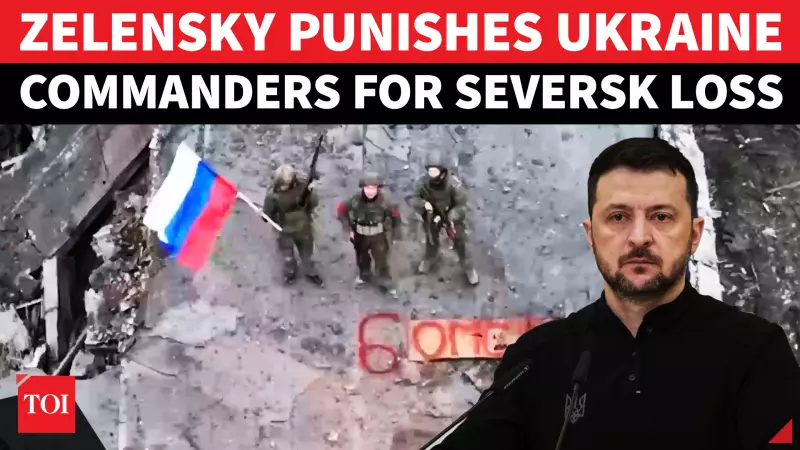
In a significant shake-up following a major battlefield setback, Ukrainian President Volodymyr Zelensky has dismissed two senior military commanders. The move comes directly after the loss of the strategic town of Seversk in the Donbass region to Russian forces.
Commanders Accused of Filing False Reports
According to a report by Ukrainskaya Pravda, the Ukrainian military has removed Colonel Aleksey Konoval of the 54th Separate Mechanized Brigade and Colonel Vladimir Poteshkin of the 10th Separate Mountain Assault Brigade from their posts. The commanders are accused of providing false information about the situation on the front lines.
The report states that these officers falsely claimed that key defensive positions around Seversk were still under Ukrainian control. This misleading information reportedly left the high command in Kyiv unaware of the true, rapidly deteriorating situation, preventing a timely response.

Seversk: A Strategic Turning Point
The rapid fall of Seversk, which occurred in late December 2025, is being viewed by military analysts as a pivotal moment in the ongoing conflict. The town held significant strategic value in the Donbass defensive line. Its capture allows Russian forces to continue their advance and puts pressure on other key Ukrainian positions in the region.
This development underscores the intense pressure on Ukrainian forces as Russia continues its offensive operations in eastern Ukraine. The purge indicates Kyiv's urgent attempt to address command failures and restore accountability.
Broader Context of the War
The dismissal of the commanders is one of the most direct responses to a battlefield loss since the war began. It highlights the challenges of maintaining accurate situational awareness in a fast-moving and high-stakes conflict. The move by President Zelensky signals a no-tolerance policy for misinformation within the military chain of command, especially after such a significant territorial loss.
As the war continues, the ability of Ukraine's military leadership to accurately assess and respond to Russian advances remains critical. The aftermath of the Seversk debacle suggests that internal accountability is being enforced alongside the external fight.






