Kyiv's Frozen Fortitude: Ukrainians Endure Harsh Winter Amidst Russian Energy Attacks
In the heart of Kyiv, Ukraine, a stark reality unfolds as residents grapple with a brutal winter exacerbated by relentless Russian assaults on energy infrastructure. The situation has plunged much of the country into darkness and cold, yet it has failed to shatter the indomitable spirit of its people.
A Chilling Daily Struggle
For Iryna Tkhoryk, a 60-year-old pet-store manager living in an apartment on Tychyna Avenue, the crisis hits home literally. Frost forms on the inside handle of her balcony door, and she can see her own breath in the air. To cope with indoor temperatures hovering around 50 degrees Fahrenheit, she bundles up in multiple layers, including a long pink hoodie, wears four pairs of socks, and keeps a hot-water bottle around her neck. Outside, the mercury dips to a bone-chilling 10 degrees.
This scenario is not unique to Tkhoryk's building. Across Kyiv and other major cities like Odesa and Dnipro, four years of Russian airstrikes have devastated Ukraine's electricity grid and disrupted heating systems. Millions are left without electricity for most of the day, and thousands of homes suffer from barely functional heating. Ukrainian President Volodymyr Zelensky recently reported that a million Kyiv residents were without power, with over 4,000 apartment buildings lacking heat.

The capital has been hit particularly hard. Until late last year, blackouts were a manageable nuisance, but now the energy crisis has escalated. Kyiv authorities note that about one-fifth of the city's three million residents have fled this month, based on cellphone data. Schools in the capital remain closed until February due to the dire energy situation.
Resilience in the Face of Adversity
Despite these challenges, Ukrainians are demonstrating remarkable resilience, frustrating Moscow's efforts to break their will through attacks on civilian infrastructure. In Tkhoryk's building and beyond, people are adapting with creativity and determination.
- Residents huddle around stoves with gas burners on for warmth, despite safety concerns.
- Cars double as charging stations for cellphones and freezers for storing frozen food.
- When power briefly returns, there is a flurry of activity to charge devices and run washing machines.
Tkhoryk recalls her grandmother's words, who survived a Soviet-imposed famine in the 1930s and World War II: "Well, we survived as best we could. We did what we could—we raised the children, we boiled grass, melted snow—we did everything." This historical endurance echoes in today's struggles.
Neighborhood Under Siege
Tychyna Avenue, named after a Ukrainian poet, symbolizes the new Ukraine that emerged after the Soviet Union's fall. Once a vibrant area with restaurants, schools, playgrounds, and a mall, it now bears the scars of war. In March 2025, a drone strike hit Tkhoryk's building, causing a fire that claimed a woman's life. Tkhoryk remembers the terror: "There are people screaming, and you can’t do anything. That’s probably the scariest thing."
Since late last year, as Russia intensified strikes on power stations, the energy crisis has permeated daily life. Grocery stores operate on unreliable generator power, and a private sauna on the river now serves primarily as a place for warm showers. The building's heating, dependent on electrical pumps, is severely disrupted, compounding the misery during a winter with heavy snowfalls and temperatures as low as 6 degrees Fahrenheit.
Adapting to Unpredictability
Daryna Prokopenko, a lawyer and tattoo artist living in the same building, has devised strategies to keep her boyfriend and young sons safe. She uses her gas stove's burners to heat the room, acknowledging the risks but prioritizing necessity. The unpredictability of power cuts upends her routine; each morning, she checks the Wi-Fi symbol on her phone and springs into action if power is available, charging every device and tackling chores.

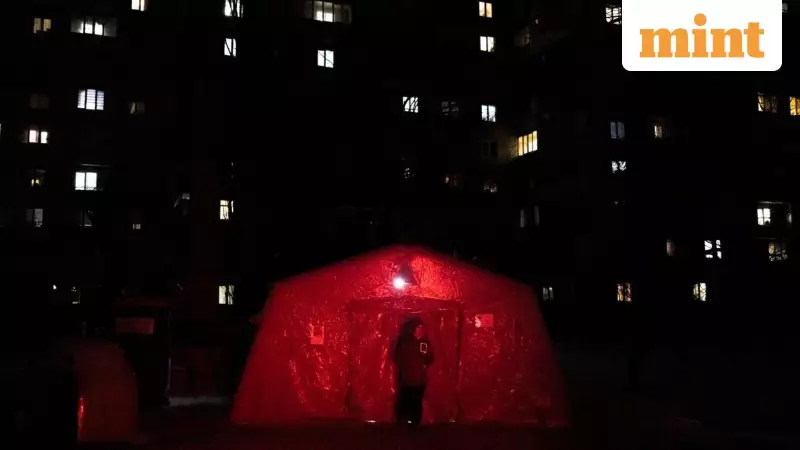
"When the light comes on, I get a burst of energy and strength—you have to tidy up the mess here, wash the dishes there," she says. Cars in the neighborhood serve dual purposes, with trunks storing frozen dumplings and other goods. Christmas trees with lights brighten apartments during outages, and children charge devices at government-run "invincibility points"—large tents with generators providing heat and electricity.
Community and Coping Mechanisms
For Viktoriia Tokarieva, an accountant from the eighth floor, a nearby tent became a makeshift office during a week-long power loss. Her 4-year-old daughter spent time with a psychologist and watched cartoons there, as her kindergarten was too cold to open. Anastasiia Samofal, a 27-year-old translator, tapes her 22-pound power bank to a shopping cart to haul it to the tent for recharging. She notes that power is now reserved for essentials, with entertainment limited to cooking, which also provides warmth.
Samofal shares a practical tip: wearing winter gloves under rubber ones to wash dishes in cold water. Her cat, Murchyk, now sports a little sweater for extra warmth. For those like Olha Kosova, caring for young children alone is even harder. With her husband in the military, power cuts made it difficult to manage a heavy stroller and heat water for her 1-year-old daughter. She relocated to her parents' house in the Kyiv suburbs, where outages are less frequent.
"The war has been going on for years, and every year, it gets harder and harder," Kosova reflects. "I want to give her a warm home, and I want her to always be clean."
Technicians on the Front Lines
Behind the scenes, technicians work grueling 12-hour shifts to restore power. Vadym Buhlak of DTEK, Ukraine's largest private power company, recalls restoring electricity to a building after 10 days of darkness, with residents offering tea and candy in gratitude. DTEK fields tens of thousands of daily calls for help, as CEO Maxim Timchenko warns, "Russia is using winter as a weapon to try and trigger a human catastrophe in Ukraine."
Unbroken Spirit
Despite the hardships, there is no sign that Ukrainian morale is breaking. On a recent Saturday evening, neighbors on Tychyna Avenue gathered around a fire for an impromptu barbecue. Laughter echoed in the dark streets as children played freely. One neighbor joked about her frozen sausages, unable to thaw them, while the group toasted with vodka and whisky for warmth. They broke into a Ukrainian patriotic march, singing, "For some reason, our glorious Ukraine is in sorrow. Hey-hey, we shall cheer up our glorious Ukraine!"
This scene encapsulates the enduring resilience of Ukrainians, who continue to find light in the darkness, warmth in community, and hope amidst the cold grip of war.