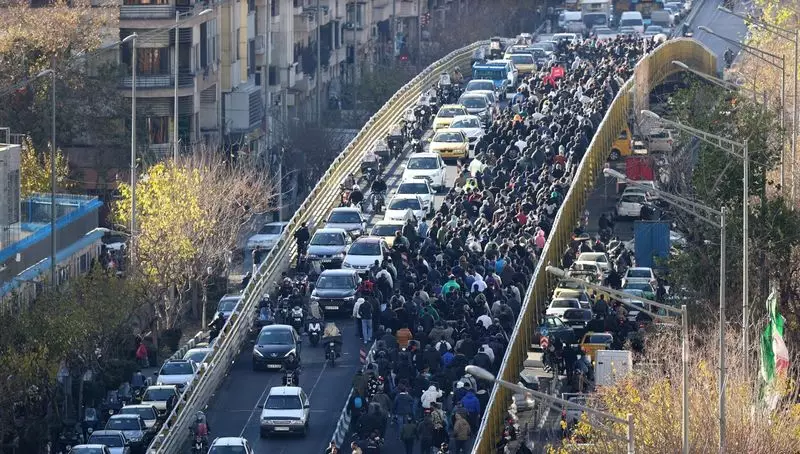
Iran has once again been gripped by a wave of public demonstrations, with citizens taking to the streets in a powerful display of dissent. The protests, which have seen a significant participation of women and youth, point to a deep-seated frustration simmering beneath the surface of the Islamic Republic. While a specific incident often acts as a trigger, the underlying causes are multifaceted, rooted in years of economic pressure, social restrictions, and political alienation.
The Spark: The Tragic Death of Mahsa Amini
The most recent and powerful wave of unrest was ignited by the tragic death of 22-year-old Mahsa Amini in September 2022. Amini was detained by Iran's Gasht-e Ershad, commonly known as the morality police, for allegedly violating the country's strict hijab (headscarf) laws. She died in custody under suspicious circumstances, with authorities claiming she suffered a heart attack but her family and protesters alleging she was beaten.
Her death became a rallying cry, symbolizing the oppressive nature of the state's control over personal lives, particularly those of women. The slogan "Woman, Life, Freedom" echoed across the nation, transforming a case of police brutality into a broad movement challenging the very foundations of theocratic governance.

Deep-Rooted Economic Grievances and Mismanagement
Beyond the immediate trigger, a persistent and severe economic crisis forms the bedrock of popular anger. Years of crippling international sanctions, coupled with domestic economic mismanagement and corruption, have devastated the livelihoods of ordinary Iranians.
Inflation has skyrocketed, the national currency, the rial, has plummeted in value, and unemployment remains high, especially among the educated youth. The gap between the rich and the poor has widened visibly, with many struggling to afford basic necessities like food and housing. This economic despair erodes the social contract and fuels resentment against a political system perceived as unresponsive and self-serving.
A Society Yearning for Social and Political Freedoms
The protests also highlight a profound clash between the rigid social codes enforced by the state and the desires of a large segment of the population, particularly the younger generation. Mandatory hijab laws are viewed by many as a manifestation of intrusive state control over individual choice and bodily autonomy.
There is a growing demand for greater social freedoms, freedom of expression, and political participation. The heavy-handed censorship of media and the internet, and the suppression of dissenting voices, have created a powder keg of frustration. The use of lethal force by security agencies against protesters, leading to numerous deaths and arrests, has only intensified the cycle of anger and resistance.
Historical Context and the Path Forward
The current protests are not an isolated event but part of a recurring pattern in Iran's recent history. Similar uprisings occurred in 2009 over disputed election results and in 2019 triggered by a sudden fuel price hike. Each episode has been met with a severe crackdown, yet the underlying discontent refuses to die.
The movement today is notable for its decentralized nature and the leading role of women and students. It represents a generational shift, with a large youth population that is globally connected and less ideologically tied to the 1979 revolution's legacy. The future trajectory remains uncertain, caught between the state's determination to maintain control and a populace increasingly willing to voice its demands for fundamental change.
In conclusion, the protests in Iran are a complex phenomenon. They are a direct response to the death of Mahsa Amini, but more significantly, they are an outburst against long-standing economic hardship, repressive social policies, and a lack of political avenues for change. The courage shown by the protesters underscores a deep and enduring struggle for dignity, rights, and a better future within Iranian society.