

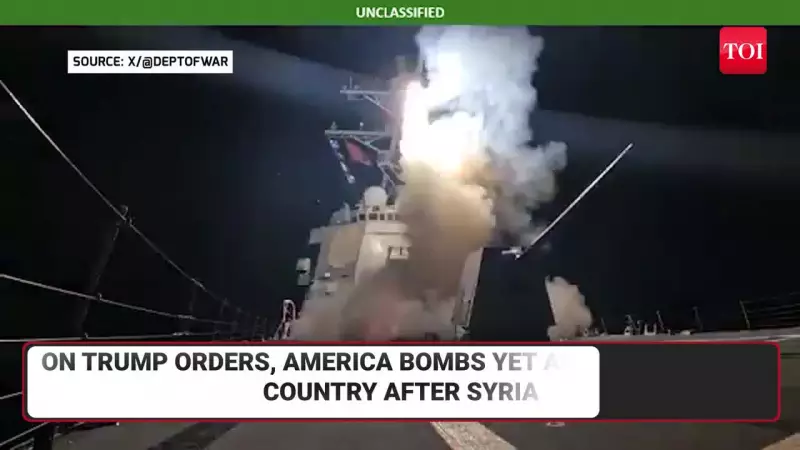
The United States has conducted a new series of military strikes against ISIS targets in Nigeria, marking the second predominantly Islamic nation to be targeted by American forces within just one week. The operation was personally announced by US President Donald Trump and later visually confirmed through a dramatic video released by the Department of War.
Video Evidence and Official Announcement
On December 26, 2025, the United States Department of War made public an eight-second video clip showcasing the precision strike. The footage captures the moment a missile, identified as a Hellfire, is launched from an aircraft and speeds towards its designated target on the ground. The release of this visual evidence serves as a powerful statement of the Pentagon's operational capabilities in the region.
Earlier that same day, President Donald Trump took to social media to announce the military action. In his statement, the President explicitly linked the strikes to a grim series of events within Nigeria. He stated that the offensive was a direct and forceful response to the recent killing of Christians in the African nation, framing it as an act of retribution and protection.

Escalating Response and Warnings
The US Secretary of War, Pete Hegseth, provided further context and a stark warning following the initial strikes. Hegseth confirmed that the recent bombings were not an isolated event but rather the beginning of a more sustained campaign. He indicated that many more strikes would follow in the near future.
In his remarks, Secretary Hegseth issued a clear call for an immediate end to the violence against religious minorities. He specifically demanded a halt to the "killing of innocent Christians in Nigeria (and elsewhere)". This language underscores the administration's intent to frame its military intervention on humanitarian and religious freedom grounds, potentially setting a precedent for future actions in other regions.
Strategic Implications and Regional Context
This military engagement in Nigeria represents a significant and rapid escalation of US foreign policy under the current administration. Striking a second Islamic nation in the span of seven days signals a more aggressive, interventionist stance against terrorist groups operating beyond traditional conflict zones like Iraq and Syria.
The decision to publicize the operation through a video release and presidential social media posts highlights a modern approach to warfare that combines military action with immediate public messaging. This strategy aims to demonstrate resolve to both domestic and international audiences, including allies, adversaries, and the terrorist organizations themselves.
Analysts are now closely watching for Nigeria's official response and the potential reaction from other African nations. Furthermore, the explicit connection made to the defence of Christian communities is likely to have complex repercussions for inter-religious dynamics within Nigeria and could influence the geopolitical calculations of other countries with significant Christian minorities facing persecution.






