

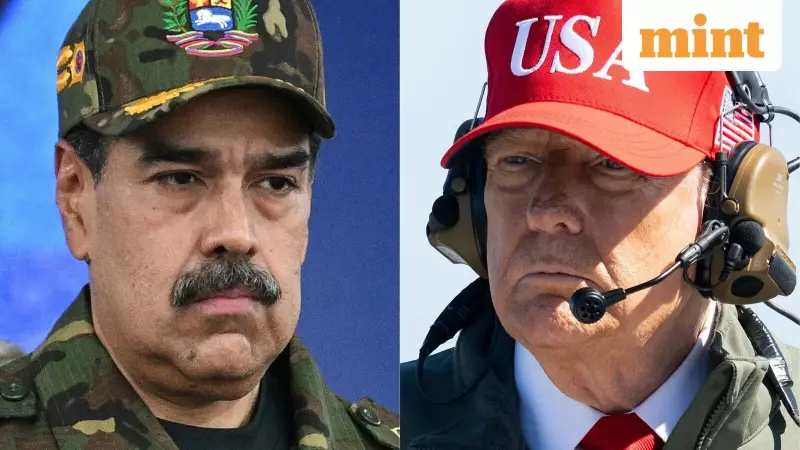
In a dramatic escalation of tensions, the United States launched military strikes against Venezuela in the early hours of Saturday, 3 January 2026. The operation resulted in the capture of the country's President, Nicolas Maduro, and his wife, who were subsequently flown out of the nation. US President Donald Trump announced the successful "large scale strike" in a post on TruthSocial, citing allegations that Maduro had turned Venezuela into a "narco-state" and manipulated elections.
Details of the Military Operation
The Venezuelan government confirmed attacks on Caracas and the states of Miranda, Aragua, and La Guaira. Residents reported hearing low-flying aircraft around 2 am local time in the capital, with at least seven separate attacks carried out. The operation marks a significant and direct intervention by the United States in the South American nation's affairs, following years of sanctions and political pressure.
Russia has publicly questioned the US claim regarding Maduro's capture, adding an international diplomatic dimension to the crisis. The action comes after the US had previously offered a $50,000,000 reward for information leading to Maduro's capture on drug trafficking charges.

10 Lesser-Known Facts About Venezuela
Political History and Leadership
Nicolas Maduro's rise to power was not straightforward. His predecessor, Hugo Chávez, who died in March 2013 after a battle with cancer, reportedly preferred Henrique Capriles as his successor. Maduro won the subsequent election by a narrow margin, a result Capriles challenged alleging voting irregularities. Maduro was sworn in as President in April 2013.
Maduro survived an assassination attempt in August 2018 when explosive-laden drones targeted him during a military parade. While he escaped unhurt, six people were arrested. In a mysterious turn, one suspect reportedly died after falling from a building's tenth floor in October 2018, with authorities calling it a suicide.
Economic Realities and Resources
Venezuela possesses the world's largest oil reserves, estimated at over 303 billion barrels as of 2024, surpassing Saudi Arabia and Iran. Despite this immense natural wealth, the country has been crippled by hyperinflation. IMF data for 2026 shows average consumer prices rising 682.1% annually, with GDP growth at a negative 3% and unemployment at 35.6%.
The nation's economy is heavily dependent on the United States, which was its largest export partner as of 2023, accounting for over 50% of shipments. Top exports include crude petroleum, petroleum coke, and scrap iron. Beyond oil, Venezuela is rich in minerals like natural gas, iron ore, gold, bauxite, and diamonds.
Social and Governance Issues
The US has designated Venezuela as a major illicit drug-producing and transit country. Drug traffickers are said to use its geography, moving substances like cocaine and fentanyl through neighboring Colombia, Ecuador, and Panama en route to the United States.
Reports from organizations like The Borgen Project and the United Nations highlight severe governance issues. The Maduro administration has been accused of silencing opposition since March 2017, stripping parliament's powers, and employing torture and extrajudicial killings. UN claims suggest government-backed death squads killed nearly 7,000 people between 2018 and May 2019.
In terms of defense, Venezuela mandates military service. All citizens aged 18 to 50 years must register, with service obligations ranging from 18 to 39 months depending on the type of duty.

Implications and Global Reaction
This unprecedented military action by the United States is set to have profound consequences for regional stability, global oil markets, and international law. The capture of a sitting head of state by a foreign power is a rare event in modern geopolitics. The situation remains fluid, with the international community, including powers like Russia, closely watching and reacting to the developments. The long-term impact on Venezuela's population, already suffering from economic collapse, and on global diplomatic norms is yet to be fully understood.





