

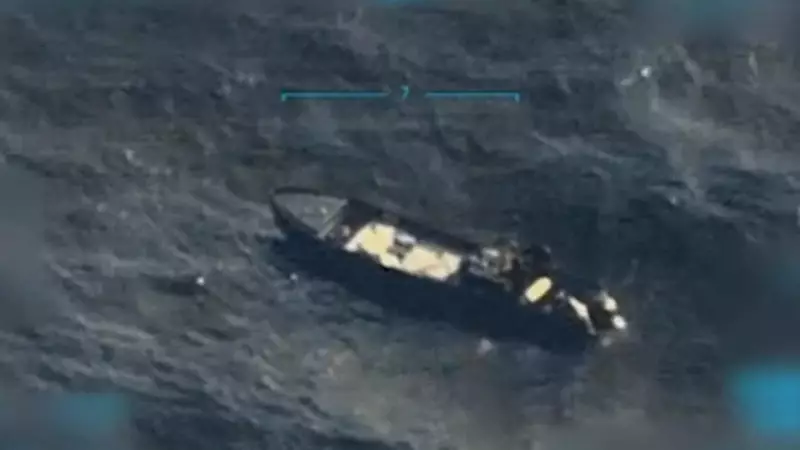
A recent US military operation in the Caribbean Sea has ignited a firestorm of international debate and legal scrutiny. The incident, involving a controversial 'double-tap' strike on a Venezuelan fishing boat, resulted in the deaths of four Venezuelan nationals. Experts are now raising profound questions, with some labeling the act a potential 'murder on the high seas'.
The Incident: A Deadly Encounter in International Waters
According to reports, the event unfolded on May 15, 2024. A Venezuelan-flagged fishing boat, identified as the 'Bella Mery', was intercepted by US authorities in the Caribbean Sea. The US Coast Guard alleges the vessel was suspected of illicit activities, specifically drug trafficking. The confrontation escalated when the boat reportedly attempted to flee.
The US response was swift and lethal. A US Coast Guard helicopter, deployed from the cutter USCGC 'Mohawk', fired upon the vessel. Crucially, reports indicate this was not a single engagement. Following an initial round of fire, the helicopter returned to strike the disabled boat again—a tactic known in military parlance as a 'double-tap' strike. This second volley proved fatal for four individuals on board.

Venezuelan authorities have vehemently contested the US narrative. They identified the deceased as Yordanis Rojas, Yonatan Torrealba, Luis Rojas, and Leobaldo Rojas, presenting them as fishermen engaged in a legitimate catch. The Venezuelan government has condemned the action as an unlawful and brutal use of force in international waters.
Expert Analysis: Legal Quagmire and Accusations of Murder
The use of a 'double-tap' strike is at the heart of the growing controversy. Legal and maritime security experts have voiced serious concerns. Professor Craig Allen, a former US Coast Guard officer and expert in maritime law, described the tactic as highly unusual in such interdiction scenarios. He stated that the second strike, after the boat was already disabled, raises immediate red flags about the proportionality and necessity of the force used.
Other international law specialists have gone further. They argue that the deliberate targeting of a vessel that was no longer a threat could constitute a grave breach of international maritime law. The term 'murder on the high seas' has been invoked by some analysts, suggesting the act may fall under universal jurisdiction crimes. The central legal question revolves around whether the use of deadly force was justified as self-defense or if it represented an extrajudicial killing.
Furthermore, the incident highlights the tense and often murky protocols for maritime law enforcement, especially when involving nations with strained diplomatic relations like the US and Venezuela. The lack of an independent, on-scene investigation complicates the establishment of an uncontested factual record.
Global Repercussions and Mounting Diplomatic Tensions
The fallout from the strike has been immediate and significant. The Venezuelan government, led by President Nicolás Maduro, has launched a formal diplomatic protest, accusing the United States of state terrorism and violating its sovereignty. Caracas has demanded a full investigation and accountability for the officers involved.
Internationally, the event has drawn attention from human rights organizations and regional bodies. There are calls for a transparent, international inquiry into the precise circumstances. The incident also risks escalating the already fraught relationship between Washington and Caracas, potentially impacting regional cooperation on issues like migration and energy.
For its part, the United States has defended the actions of its Coast Guard personnel, maintaining that they followed standard procedures when faced with a non-compliant vessel suspected of trafficking. An internal review is likely, but the US has shown no indication of conceding any wrongdoing.

The May 15th 'double-tap' strike on the Venezuelan fishing boat 'Bella Mery' is more than a bilateral dispute. It has become a flashpoint for debates on maritime law, the limits of use of force, and accountability in the vast, law-enforcement-challenged domain of the high seas. As experts dissect the legality and morality of the action, the families of the four deceased Venezuelans await answers, and the world watches a test case in international justice unfold.





