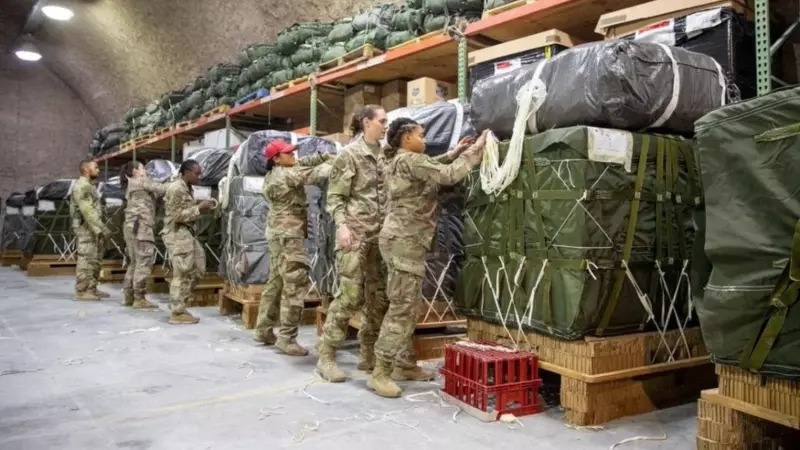
In a significant development addressing the humanitarian crisis in Gaza, United States military forces have begun working directly with Israeli officials to establish a maritime aid corridor. This collaboration marks a new phase in international efforts to deliver essential supplies to the besieged Palestinian territory.
Joint Operation for Humanitarian Assistance
The cooperation involves US military personnel working alongside Israeli counterparts to construct a temporary pier off the Gaza coast. This infrastructure project aims to facilitate the delivery of humanitarian assistance by sea, creating an alternative route when land crossings face challenges.
An Israeli official, speaking on condition of anonymity, confirmed the ongoing collaboration between the two nations' military forces. The partnership comes as international pressure mounts to address the worsening humanitarian situation in Gaza, where basic necessities have become increasingly scarce.

Details of the Maritime Aid Plan
The temporary pier initiative represents one of the most concrete steps taken by the international community to establish a sustained aid flow into Gaza. US forces, particularly from US Central Command (CENTCOM), are providing technical expertise and logistical support for the project.
This maritime route is expected to complement existing land crossings while avoiding some of the security complications that have hampered aid distribution through traditional channels. The temporary nature of the structure addresses concerns about permanent infrastructure while still enabling significant aid volumes.
Neither US nor Israeli officials have specified the exact number of military personnel involved in the operation or the projected timeline for the pier to become fully operational. However, the collaboration indicates both nations are treating the humanitarian situation with increased urgency.
Broader Context and Implications
This military cooperation on humanitarian aid occurs against the backdrop of ongoing conflict in the region. The joint effort demonstrates how security and humanitarian concerns are increasingly intertwined in the Gaza situation.
The involvement of US forces in direct assistance operations also signals Washington's commitment to playing an active role in mitigating the crisis, even as it maintains its strategic partnership with Israel. This balanced approach seeks to address immediate human needs while navigating complex political dynamics.
International aid organizations have repeatedly warned about the deteriorating conditions in Gaza, where the population faces severe shortages of food, clean water, and medical supplies. The US-Israel coordinated effort on the temporary pier could significantly boost aid capacity if successfully implemented.
As the situation evolves, this military-humanitarian partnership may set precedents for how international actors can collaborate on crisis response in conflict zones. The success or challenges of this temporary pier initiative will likely influence future approaches to aid delivery in similarly complex environments.