US-Israel Launch Major Strikes on Iran, Triggering Widespread Regional Conflict
The Middle East has plunged into a rapidly escalating conflict following large-scale joint military strikes by the United States and Israel against Iran. The operation, which resulted in the death of Iran's Supreme Leader Ayatollah Ali Khamenei, has unleashed a wave of retaliatory attacks across the region, raising fears of a prolonged and devastating war.
Initial Strikes and Iranian Leadership Casualty
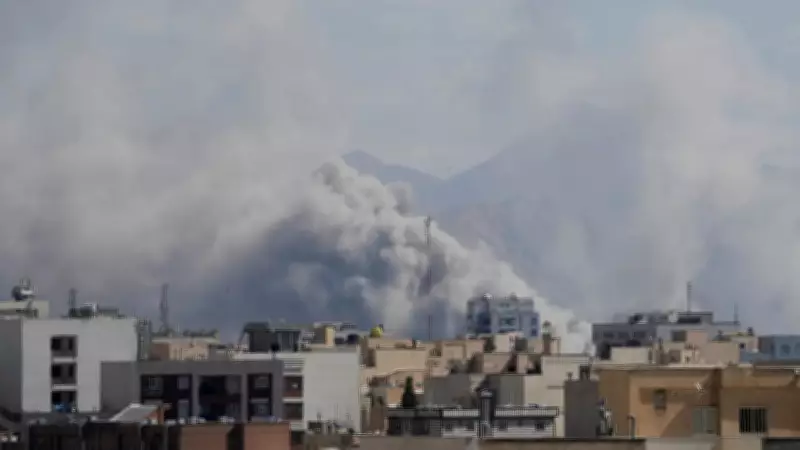
In a coordinated campaign dubbed Operation Epic Fury, US and Israeli forces targeted hundreds of Iranian military facilities. Israeli jets conducted "large-scale strikes" on Tehran, focusing on Revolutionary Guard facilities, air defense systems, and command centers. Simultaneously, the US military confirmed it had destroyed the headquarters of Iran's Islamic Revolutionary Guard Corps (IRGC).
Iranian state media reported that Ayatollah Ali Khamenei was killed in the initial strikes, alongside several senior officials and family members. Tehran has since formed an interim governing council and vowed severe retaliation, calling the killing a "declaration of war."

Hezbollah Enters the Fray with Cross-Border Attacks
The conflict quickly spread beyond Iran's borders when the Lebanese militant group Hezbollah fired missiles and drones into Israeli territory early Monday. This marked the first time in over a year that Hezbollah has publicly acknowledged carrying out a direct strike against Israel.
In response, Israeli forces launched a wave of air strikes on Beirut, targeting Hezbollah positions across Lebanon. The Israeli military stated it intercepted one projectile while others landed in open areas, with no immediate reports of injuries or significant damage from the initial attack.
Hezbollah described its action as retaliation for Khamenei's killing and what it called "repeated Israeli aggressions." Lebanon's Prime Minister subsequently criticized the rocket fire on Israel as "irresponsible and suspicious," highlighting the complex regional dynamics at play.
Iranian Retaliation and Regional Fallout
Iran responded to the initial strikes with missile and drone attacks targeting both Israel and Gulf states hosting US forces. At least eleven people were reported killed in Israel, including nine in a strike on a synagogue in Beit Shemesh, while seven were injured in the Jerusalem area during a missile barrage.
Gulf Cooperation Council members, including Bahrain, Jordan, Kuwait, Qatar, Saudi Arabia, and the United Arab Emirates, jointly condemned Iran's actions. In a strong statement, they described the targeting of civilians and countries not engaged in hostilities as "reckless and destabilizing behavior."
The UAE summoned Iran's ambassador to deliver a formal protest, condemning what it termed "terrorist attacks and assaults" on residential areas, airports, and ports. Gulf nations warned that continued escalation could have serious political and economic repercussions across the Middle East.
Human Cost and Military Developments
President Donald Trump confirmed that three US service members were killed during operations against Iran, warning that further American casualties were likely. In a video address, Trump vowed that "America will avenge their deaths" and deliver "the most punishing blow" to those responsible.
The US president called on Iran's Revolutionary Guard and military to surrender, offering them "full immunity" if they "lay down your arms" or face "certain death." He indicated that Operation Epic Fury could last approximately four weeks and would continue until all objectives were met.
Economic Impact and Global Response
The conflict has already triggered significant economic consequences, with global oil prices surging sharply amid fears of supply disruption. Brent crude rose to around $79 per barrel while West Texas Intermediate climbed to about $72, both representing roughly 8% increases from previous trading levels.

The Strait of Hormuz, through which approximately 20% of the world's oil passes, has become a particular concern. Iran previously declared the strategic waterway closed, and maritime agencies reported attacks on vessels in the area. Shipping companies have suspended transit through both the Suez Canal and the strait due to safety fears.
Internationally, the European Union warned that the Middle East "stands to lose greatly from any drawn-out war" and urged restraint. EU foreign policy chief Kaja Kallas cautioned that further escalation could threaten "the Middle East, Europe and beyond, with unpredictable consequences."
Meanwhile, the United Kingdom has agreed to allow the United States to use UK bases for "defensive" strikes targeting Iranian missiles and launchers. British Prime Minister Keir Starmer emphasized that while Britain would support defensive actions, it "was not involved in the initial strikes on Iran and will not join offensive action now."
As diplomatic efforts continue to call for de-escalation, military preparations across Europe suggest growing concern over a protracted conflict that could have far-reaching global implications.