

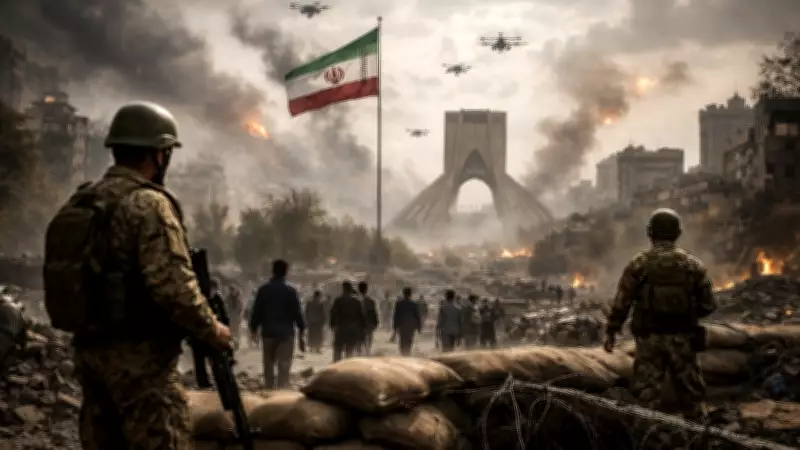
Fragile Ceasefire in US-Israel-Iran War Shifts Focus to Strategic Changes
For weeks, the conflict between the United States, Israel, and Iran was measured through strikes, targets, and retaliations across multiple fronts. Now, under a fragile two-week ceasefire brokered by Pakistan and announced on April 7, the metric has shifted dramatically. The immediate focus is no longer solely on battlefield damage but on whether the conflict has brought about fundamental changes and whether this ceasefire can hold.
A Fragile Pause Amid Ongoing Tensions
The truce brought a temporary halt to large-scale US and Israeli strikes on Iran, opening a narrow diplomatic window. However, reports of renewed missile alerts and attacks across the Gulf almost immediately cast doubt on its durability. Within hours of the announcement, missile alerts were reported in the United Arab Emirates, Kuwait, Qatar, and other Gulf states. Iran's state and semi-official media, cited by Reuters, reported that oil tankers transiting the Strait of Hormuz were halted after what they described as an Israeli "ceasefire breach." Tehran warned it could withdraw from the agreement if fighting in Lebanon continued.
Even the understanding of key provisions differs among the parties. The United States insists that safe, coordinated passage through Hormuz was part of the ceasefire terms, while Iran says passage is conditional and subject to coordination with its armed forces. Israel, while backing the truce with Washington, continues operations against Hezbollah in Lebanon, arguing the ceasefire does not apply in that region.

Leadership Attrition and Institutional Continuity
One of the most striking aspects of this conflict has been the changes in Iran's senior political and military leadership. Despite sustained US-Israeli strikes targeting command structures early in the war, Iran's broader governance apparatus has continued to function with replacements stepping in where leaders were killed or incapacitated.
Notable confirmed casualties include Supreme Leader Ali Khamenei, killed in a strike on February 28, 2026, a rare and historically significant loss at the very top. This was followed by Ali Larijani, secretary of Iran's Supreme National Security Council, and several senior military figures, including Defence Minister Aziz Nasirzadeh and IRGC commander Mohammad Pakpour, all killed in subsequent strikes.
Despite these losses, Tehran has swiftly appointed successors and maintained centralized decision-making. This continuity complicates simplistic narratives about "regime collapse," with the state's institutions remaining functional even amid leadership attrition. Public messaging has diverged sharply: President Donald Trump declared that the campaign had achieved "regime change" and insisted negotiations were now occurring with "different people," while Iranian officials framed the pause as a strategic victory that compelled adversaries to accept conditions without eroding core institutional control.
Strait of Hormuz: Central, Complicated, and Contested
The Strait of Hormuz, through which roughly a fifth of global crude oil and LNG flows in peacetime, has been a strategic flashpoint of the conflict. While the ceasefire includes provisions for coordinated passage, Iran's conditions have tempered expectations of a full reopening. Tehran insists that vessels must coordinate with its military before transit and has resisted the idea of unrestricted shipping without oversight.
US statements suggested potential cooperation, with President Trump, in a statement to ABC News, floating the idea of a "joint venture" with Iran to manage shipping and fee structures in the strait, an arrangement that would formalize Iran's control and generate revenue. However, Trump also asserted that the US would take control and get Hormuz opened, highlighting the ongoing tensions.

Nuclear and Missile Programmes: Unresolved Core Issues
At the heart of the crisis remain Iran's nuclear and missile capabilities, two of the original drivers of the conflict that still defy comprehensive resolution. Iran's stockpile of highly enriched uranium remains within the country and has not been seized or rendered fully inoperable, even though some enrichment facilities were struck early in the conflict. Tehran insists it retains the right to enrich uranium for peaceful purposes while denying ambitions for nuclear weapons.
Competing ceasefire frameworks also showcase these differences. In the Farsi version of Iran's 10-point ceasefire plan, the phrase "acceptance of enrichment" for its nuclear programme was included, a term absent from English versions circulated by Iranian diplomats and foreign journalists, signalling Tehran's insistence on safeguarding its nuclear rights as part of any settlement.
Meanwhile, US demands during negotiations have included constraints on enrichment and broader limitations on Iran's nuclear and missile infrastructure, with Trump linking the ceasefire sustenance to curbs on uranium and nuclear developments. This gap remains one of the central stumbling blocks in diplomatic discussions.
Military Posture and Operational Reach
Although Iran's military infrastructure has sustained significant damage, including to air defence networks, missile forces, and command organizations, it has not been dismantled. Key strike capabilities continue to operate well into the ceasefire phase. US and Israeli strikes have partially degraded Iran's ballistic missile and drone inventories, but intelligence assessments indicate that Tehran retains sufficient firepower to maintain a "war of attrition" and a credible regional deterrent, according to experts at The Soufan Center.
US Defense Secretary Pete Hegseth, in his latest media briefing, said that while US forces struck large portions of Iran's missile and air-defence infrastructure, they remain prepared to resume operations if Tehran fails to comply with the ceasefire. According to Gen. Dan Caine, chairman of the Joint Chiefs of Staff, more than 13,000 targets have been struck in operations against Iran, destroying 80% of the country's air defense systems and attacking 90% of its weapons factories. Caine added that more than 90% of Iran's regular naval fleet has been sunk, "including all major surface combatants" with 150 ships now "at the bottom of the ocean."
However, Iran has not independently confirmed US assertions about the scale of damage to its military capabilities and continues to maintain that its defence systems and strike capacity remain in place and ready. Independent analysts also emphasized the resilience of Iran's missile and drone programs. The Council on Foreign Relations noted that Iran's ability to disperse launchers, command units, and production facilities underground or into fortified locations has limited the effectiveness of air strikes, allowing it to conserve stockpiles for retaliatory use.
Further complicating the picture, US and allied air-defence systems face operational strain from the volume and diversity of Iranian unmanned attack drones, which are harder to detect and intercept than conventional missiles. Defense analysts warn that continued drone salvos could deplete interceptor inventories, highlighting the strategic value Iran places on unmanned systems.
Also, the conflict has shown that US forces incurred losses and faced resistance from Iranian air defences. A US F-15E fighter jet was shot down over Iran during operations, marking one of the most significant aerial losses of the conflict. Both crew members ejected, with one rescued within hours and the second extracted in a high-risk rescue mission after nearly two days. A US A-10 attack aircraft was also lost, with the pilot ejecting and surviving. The US military has officially confirmed that 13 American service members were killed during the conflict, with over 350–370 personnel wounded.
Regional Impact: Broader Costs and Diplomatic Reverberations
Even as the ceasefire reduces overt violence, the war's effects resonate across the Middle East and beyond. Gulf Arab states have suffered damage to oil and energy facilities, transportation hubs, and other infrastructure, shaking confidence in regional stability and investment climates.
Additionally, the financial cost of the conflict has been substantial. Pentagon officials told US lawmakers that the first six days of the war with Iran cost at least $11.3 billion in direct military operations, including munitions and strike sorties. Independent fiscal analysts, including the Penn Wharton Budget Model, estimated that direct US military spending on the Iran campaign had climbed into the tens of billions of dollars, with projections around $27–28 billion after about a month of operations and potential total expenditures of $38–47 billion by late April.
For Iran, the economic consequences are severe too. Iranian officials and analysts describe the domestic economy as "shattered," with critical infrastructure damaged, widespread unemployment, and steep increases in the cost of living, in some cases by as much as 40 per cent since the war began. Yet, despite the devastation, Iran says it retains key elements of its economic and institutional framework, offering a narrow but significant foundation for recovery.
In this context, international reactions have been mixed. The United Nations Secretary-General and European leaders welcomed the pause and emphasized civilian protection, while analysts warned that the temporary ceasefire may not resolve deep disputes over nuclear rights, missile programmes, sanctions, and broader regional security architecture.
US–Israel Alignment: Public Unity, Underlying Differences?
From Iran's perspective, another important takeaway could be the rumoured lack of full alignment between Washington and Tel Aviv. While both sides continue to project unity, their positions during and after the ceasefire point to differences in priorities and end goals. Trump has emphasized negotiation, reopening the Strait of Hormuz, and the possibility of winding down the conflict, even as he alternates between threats and diplomacy. In contrast, Israeli Prime Minister Benjamin Netanyahu has maintained that the ceasefire is "not the end" and that Israel retains the option to resume military action, keeping its "finger on the trigger."
Reporting and analysis further indicate that while both countries share short-term military objectives, their endgames diverge—with Washington more open to a negotiated outcome and Israel preparing for a longer campaign aimed at weakening Iran more fundamentally. For Tehran, this distinction matters: it suggests that even if the US leans toward de-escalation, continued Israeli operations could keep the conflict active, complicating the ceasefire's durability.
A Mixed Outcome and Uncertain Future
The ceasefire shows a conflict that has changed conditions on the ground but left many core drivers unresolved. Iran's political and military structures remain functionally intact despite leadership losses. Strategic leverage in areas like Hormuz and missile capability persists, and diplomatic engagement continues. At the same time, deep mistrust, competing demands, and regional conflict dynamics mean this truce is better understood as a tactical pause than a stable peace. Whether this pause evolves into a durable settlement or simply marks the interval before renewed escalation remains an open question.





