US Troops Complete Second Military Base Exit In Syria Within Seven Days
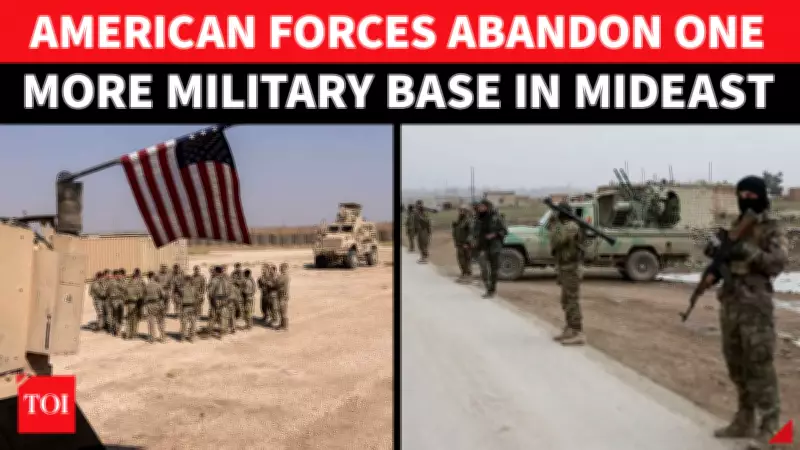
The Syrian defence ministry has officially announced that its armed forces have assumed control of a strategic northeastern military base. This transfer of authority occurred following direct coordination with American military personnel stationed at the facility. The development represents a significant reduction of the United States' ground footprint in the region.
A Pattern of Strategic Withdrawals Emerges
This latest handover comes merely days after Washington confirmed its complete withdrawal from the Al-Tanf garrison, a key outpost located near the tri-border area with Jordan and Iraq. The back-to-base departures signal a deliberate shift in the US military posture within Syrian territory.
Despite the drawdown of ground forces, US Central Command (CENTCOM) reports maintaining an active operational tempo. Official statements indicate that American forces have conducted more than thirty separate airstrikes against Daesh (Islamic State) targets throughout the current month, suggesting a continued commitment to counter-terrorism objectives from a distance.

Evolving Political Landscape and Alliance Shifts
The withdrawals coincide with emerging new political dynamics in Damascus and observable shifts in alliances among various factions on the ground. The reported deal between the Syrian Democratic Forces (SDF), a Kurdish-led alliance, and the government in Damascus appears to be a critical factor facilitating these US troop movements.
This coordination raises profound questions about the long-term stability of the region and the future operational role of the Kurdish-led forces, who have been pivotal US allies in the fight against ISIS. Analysts are closely monitoring how these forces will integrate into Syria's evolving security architecture.
Uncertain Future for Regional Security Framework
The consecutive base abandonments create a complex security vacuum. Key considerations for regional stakeholders now include:
- The capacity of Syrian government forces to secure these areas against residual militant threats.
- The sustainability of the SDF-Damascus agreement and its implications for Kurdish autonomy.
- The potential for other regional powers to increase their influence in the wake of the US drawdown.
- The impact on ongoing efforts to prevent an ISIS resurgence in northeastern Syria.
While the physical US presence diminishes, the strategic consequences of these withdrawals will likely shape the geopolitical landscape of the Middle East for the foreseeable future, with stability in the balance.