

High-Stakes Rescue Mission Unfolds in Iran as US Hunts Missing F-15 Pilot
A perilous rescue operation is currently unfolding behind enemy lines in Iran, where time, treacherous terrain, and imminent threats converge into an extremely dangerous equation. As US military forces intensify their efforts to locate a missing F-15 pilot, Iran has escalated tensions by offering bounties to civilians for capturing what they term the "enemy." Military experts have issued stark warnings that any attempt to retrieve the service member will be fraught with extraordinary risks and complications.
US Intensifies Search in Remote Iranian Mountains
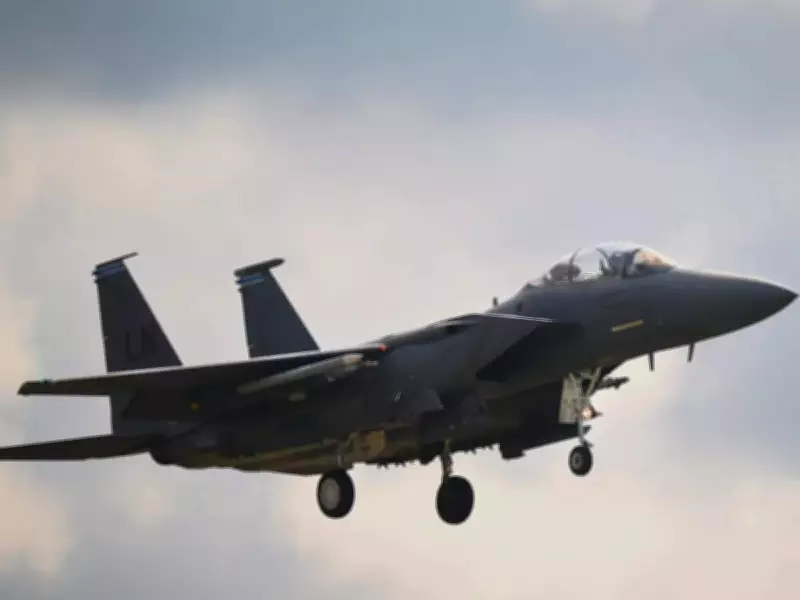
The United States military dramatically escalated its search operations on Saturday for a missing pilot in the remote, mountainous region of southwestern Iran. This urgent mission follows Iranian forces shooting down an American warplane just one day earlier, with Iranian authorities publicly urging citizens to report any sightings of the pilot's whereabouts. The aircraft, identified by Iran as an F-15E Strike Eagle, was one of two targeted in the previous day's hostilities.
While one pilot was successfully rescued following the incident, at least one American service member remains unaccounted for. This development marks the first confirmed loss of a US aircraft inside Iranian territory since the conflict began six weeks ago, potentially increasing significant pressure on the administration of Donald Trump to reassess its strategic approach in the region.

The downing of the US aircraft presents a stark contrast to recent assertions made by President Trump, who claimed in a national address that Iran had been "completely decimated." Both the United States and Israel had previously maintained that Iran's air defense systems were largely neutralized, making this incident particularly significant and unexpected.
Challenging Terrain Complicates Rescue Efforts
Search operations are now concentrated in the rugged, difficult terrain of Kohgiluyeh and Boyer-Ahmad province, where conditions severely complicate both surveillance capabilities and rescue efforts. The mountainous landscape presents numerous obstacles for military operations, limiting visibility and creating hazardous conditions for any extraction attempt.
Official details about the operation remain notably limited. Neither the White House nor the Pentagon has issued comprehensive statements regarding the ongoing mission. However, a Pentagon communication accessed by the Associated Press confirmed that military officials had received reports of "an aircraft being shot down" in the Middle East, though they declined to elaborate further on the specifics.
Speaking to NBC News, President Trump attempted to downplay the broader implications of the incident, stating that it would not impact ongoing negotiations with Iran. Meanwhile, Iranian state media reported additional developments, claiming that a US A-10 attack aircraft also crashed in the Persian Gulf after being hit by Iranian defenses. A US official speaking on condition of anonymity clarified that it remains unclear whether this second aircraft was actually shot down or suffered a mechanical crash, with no immediate information available about the crew or crash site.
Iran Escalates with Civilian Bounty Offers
In a notable escalation of tensions, a presenter on an Iranian state-affiliated television channel explicitly called on civilians to hand over any "enemy pilot" to authorities, marking the first such public appeal in the current conflict. This development adds another layer of complexity to the rescue mission, as it potentially mobilizes civilian populations against the missing service member.
"This Isn't Like TV": Experts Warn of Extreme Dangers
Contrary to popular imagination and cinematic portrayals, rescue operations in active combat zones are not straightforward missions involving simple helicopter extractions. Bryan Stern, a former US special forces veteran, described the challenges in stark terms to CNN, emphasizing that "this is not a cinematic extraction, but a deeply complex and dangerous operation where every move could trigger deadly consequences."

"This isn't like TV," Stern told CNN while underlining the extreme unpredictability of such missions. The airspace itself remains contested and hazardous, with reports of Iranian forces firing at low-flying helicopters serving as a chilling reminder that even reaching the extraction zone could invite direct confrontation with hostile forces.
The clock is ticking relentlessly on the rescue operation. For the United States, the urgency is particularly acute. While Israel confirmed that one pilot was successfully rescued, the second pilot now remains missing and has been evading capture for over thirty-six hours. For this individual, operating behind enemy lines for such an extended period places immense physical and psychological strain, complicating survival efforts.
Survival Challenges in Hostile Territory
The situation for the missing pilot is further complicated by multiple factors including rugged mountainous terrain, limited or completely disrupted communication capabilities, the possibility of injury sustained during the crash, and an active pursuit by hostile forces determined to capture him. In such extreme conditions, survival becomes a desperate race against exhaustion, exposure to harsh elements, and constant threat of detection by enemy personnel.
Night Operations: Strategic Advantage with Added Risks
If a rescue attempt is mounted, military analysts suggest it will likely unfold under the cover of darkness. The United States military maintains a significant technological edge in night operations, possessing superior night vision capabilities and advanced navigation systems. Darkness, in this strategic context, serves as both a protective shield and a tactical advantage.
Yet nighttime operations come with their own substantial risks and challenges. Flying at night in mountainous terrain demands extreme precision and skill from pilots, who must navigate not just difficult geography, but also the invisible threat of enemy fire from concealed positions. For the stranded crew member, moving or signaling in complete darkness adds another significant layer of difficulty to an already perilous situation.
As both the United States and Iran accelerate their efforts to locate the missing pilot, the conflict continues to escalate with reports of fresh missile launches and explosions occurring regularly. The geopolitical stakes continue to rise with each passing hour, making this rescue mission one of the most critical and dangerous operations in recent military history.





