

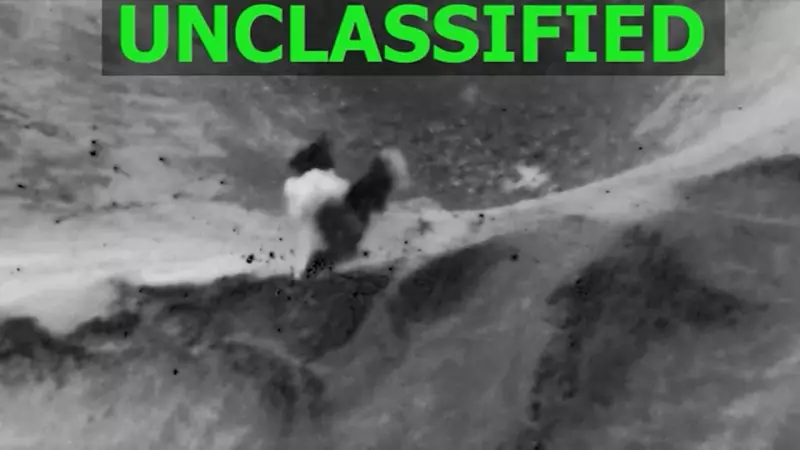
In a significant escalation of military action, the United States executed a series of large-scale retaliatory airstrikes against Islamic State (ISIS) targets throughout Syria on Sunday. This decisive move comes as a direct response to a deadly ambush near Palmyra last month that claimed the lives of two American soldiers and a civilian interpreter.
Operation Hawkeye Strike: A Forceful Response
According to US Central Command, the coordinated military action, dubbed Operation Hawkeye Strike, commenced around 12:30 PM Eastern Time. American forces, operating alongside partner nations, unleashed a formidable assault on multiple ISIS facilities across the country. A US official disclosed to CNN that the operation involved more than two dozen aircraft firing over 90 precision-guided munitions.
The strikes are part of the Trump administration's ongoing response to the December attack, which killed Sergeant Edgar Brian Torres-Tovar, 25, from Des Moines, Iowa; Sergeant William Nathaniel Howard, 29, from Marshalltown, Iowa; and civilian interpreter Ayad Mansoor Sakat. The soldiers were members of the Iowa National Guard supporting Operation Inherent Resolve, the US-led mission to dismantle ISIS. Three other Guard members were injured in the ambush.

US Central Command, in a statement on social media platform X, emphasized that the objective was to degrade ISIS's remaining capabilities and prevent future attacks. The command issued a stern warning: "Our message remains strong: if you harm our warfighters, we will find you and kill you anywhere in the world, no matter how hard you try to evade justice."
Escalating Tensions and Regional Clashes
The December ambush was the first fatal attack on US personnel in Syria since the overthrow of longtime ruler Bashar al-Assad in December 2024. Operation Hawkeye Strike was initially launched on December 19 with a massive operation striking approximately 70 ISIS targets in central Syria, followed by another round of US-Jordanian strikes last month.
Simultaneously, tensions flared in northern Syria. On Saturday, intense clashes erupted in Aleppo's Kurdish-majority Sheikh Maqsoud neighborhood after negotiations between the Syrian government and the Syrian Democratic Forces (SDF) stalled. Syrian government forces deployed in the area following days of fighting that, according to the AP, left at least 22 people dead, including civilians.
Later on Saturday, an explosive drone struck the Aleppo Governorate building shortly after a press conference by officials. The United States called for both sides to return to negotiations. Conflicting reports emerged about a ceasefire, with authorities claiming Kurdish fighters were transferred out, a statement denied by Kurdish forces.
The US Mission and Shifting Alliances
The situation highlights the complex dynamics in Syria. The Kurdish-led SDF has been Washington's primary ally in the fight against ISIS. However, since Assad's ouster, the US has increasingly coordinated with the central government in Damascus, which recently joined the global anti-ISIS coalition.
Despite former President Donald Trump's reservations about US involvement, hundreds of American troops remain deployed in Syria under Operation Inherent Resolve. The Pentagon had earlier announced plans to reduce troop levels by half, and US officials indicated a long-term goal of consolidating bases to just one in the country.
A day before the latest US strikes, Syrian officials announced the arrest of the military leader of ISIS's operations in the Levant, underscoring the ongoing, multi-front effort to counter the terrorist group's resurgence in the region.






