

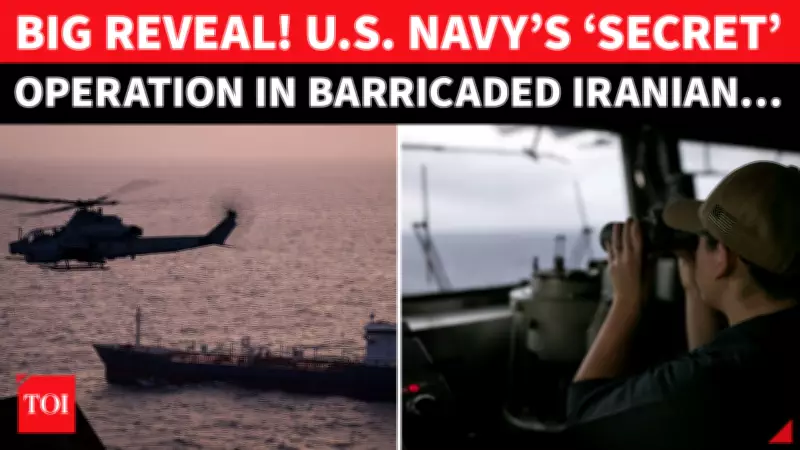
A stunning report by The New York Times has shed light on an alleged covert U.S. military operation in the Strait of Hormuz, one of the world's most strategically important waterways. According to the report, U.S. Central Command has been quietly coordinating the movement of commercial vessels through the narrow passage amid heightened tensions with Iran. Some ships reportedly switched off their transponders and traveled along routes closer to Oman to avoid detection.
Geopolitical Standoff Intensifies
The revelations come as the Strait of Hormuz remains at the center of a major geopolitical standoff following the U.S.-Iran confrontation. As Washington weighs a possible agreement to reopen the waterway and Tehran insists the strait is not up for negotiation, the battle over one of the world's most vital trade routes continues to send shockwaves through global energy markets.
Covert Operations Revealed
The New York Times report, based on interviews with current and former U.S. officials, details how the U.S. military has been secretly escorting commercial vessels through the strait without public acknowledgment. The operation, dubbed "dark ships" by some officials, involves the U.S. Navy providing close protection to tankers and cargo ships, sometimes with ships turning off their Automatic Identification System (AIS) transponders to avoid detection by Iranian forces.

Route Changes to Avoid Detection
According to the report, some vessels have altered their routes to travel closer to the Omani coast, reducing their exposure in the narrowest parts of the strait. These measures are designed to prevent Iranian harassment or seizure of ships, which has been a recurring issue in recent years.
Global Energy Markets on Edge
The Strait of Hormuz is a critical chokepoint for global oil shipments, with about 20% of the world's petroleum passing through it. Any disruption to traffic in the strait can cause significant volatility in oil prices. The covert U.S. operation underscores the high stakes involved, as both Washington and Tehran seek to assert control over the waterway.
Iran's Response
Iran has repeatedly warned that it will not allow the strait to be used as a bargaining chip in negotiations. Tehran has threatened to close the waterway if its interests are not respected, raising fears of a direct military confrontation. The NYT report has further strained relations, with Iranian officials calling the covert operation an act of aggression.
International Reactions
The revelations have sparked debate among international observers. Some analysts argue that the covert escort mission is a necessary measure to ensure freedom of navigation, while others warn that it could escalate tensions with Iran. The United Nations has called for restraint from all parties, urging diplomatic solutions to avoid a broader conflict.
As the situation continues to evolve, the world watches closely, with the potential for a major crisis in one of the most volatile regions on earth. The NYT report has brought to light a secret operation that may have far-reaching consequences for global security and energy markets.






