US and Israel Launch Coordinated Strikes on Iran Using Advanced and Low-Cost Weaponry
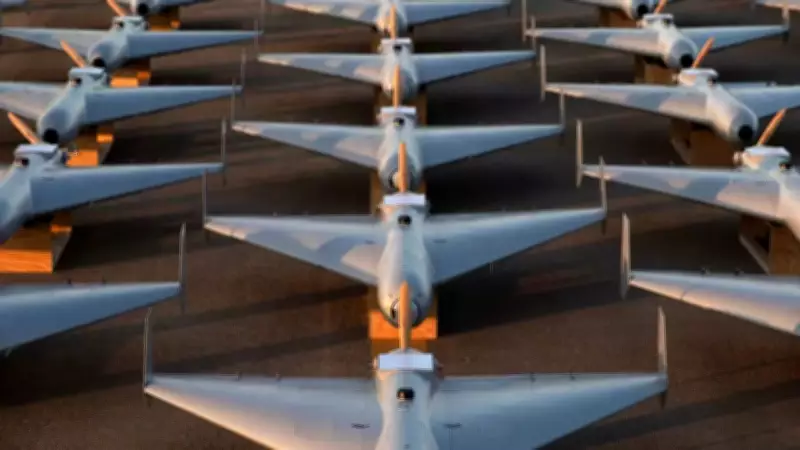
In a dramatic escalation of drone warfare capabilities, the United States has turned Iran's own drone strategy against it by deploying the new Low-cost Unmanned Combat Attack System (LUCAS) for the first time. This move occurred during coordinated strikes with Israel under Operation Epic Fury, marking a significant shift in military tactics.
Operation Epic Fury Targets Key Iranian Military Assets
The coordinated strikes, orchestrated by US President Donald Trump and Israeli Prime Minister Benjamin Netanyahu on Saturday, focused on critical Iranian military infrastructure. The operation resulted in the death of Tehran's Supreme Leader Ayatollah Ali Khamenei, highlighting its severe impact. US and Israeli forces utilized a combination of advanced fighter jets, long-range cruise missiles, and low-cost autonomous drones, showcasing a blend of high-tech and economical warfare strategies.
First Combat Use of the LUCAS Drone
As part of Operation Epic Fury, the US military introduced the LUCAS drone, a one-way "kamikaze" system reverse-engineered from Iran's Shahed-136 platform. US Central Command (CENTCOM) announced on X that this marked the first historical use of such drones in combat, describing them as delivering American-made retribution. The drones are designed to be low-cost and expendable, with each unit costing approximately $35,000, making them far cheaper than many conventional precision weapons.

Details on the LUCAS System and Its Origins
According to Pentagon reports and Reuters, the drones used in the strike appear identical to the LUCAS system manufactured by Spektreworks, a company based in Phoenix, Arizona. The system is intended for large-scale production by multiple manufacturers, reflecting a broader military shift toward "affordable mass." This strategy involves deploying large numbers of inexpensive weapons to overwhelm adversaries, a tactic that gained prominence after Russia's invasion of Ukraine demonstrated the effectiveness of drones on the battlefield.
Tomahawk Cruise Missiles and Advanced Fighter Jets in Action
The strikes also featured Tomahawk Land Attack Missiles, which are long-range, precision-guided cruise missiles capable of striking targets up to 1,000 miles away. These missiles, typically launched from sea-based platforms, have been used in previous operations, including strikes on Houthi targets in Yemen. In terms of aircraft, the operation involved:
- F-35 fighter jets: Fifth-generation stealth aircraft designed to evade radar detection and carry precision-guided munitions.
- F/A-18 fighter jets: Multi-role aircraft manufactured by Boeing, capable of air-to-air and air-to-ground missions.
Both the US and Israel have extensively deployed these aircraft in the Middle East, enhancing their operational capabilities.
Targets and Strategic Implications of the Strikes
CENTCOM stated that Operation Epic Fury targeted Islamic Revolutionary Guard Corps command-and-control facilities, Iranian air defense systems, missile and drone launch sites, and military airfields. This comprehensive approach underscores the strategic intent to cripple Iran's military infrastructure. The use of low-cost drones like LUCAS alongside high-end weapons signals a new era in warfare, where affordability and scalability play crucial roles in military planning.
The growing reliance on such technologies highlights ongoing adaptations in global military strategies, with potential long-term implications for conflicts in the region and beyond.