

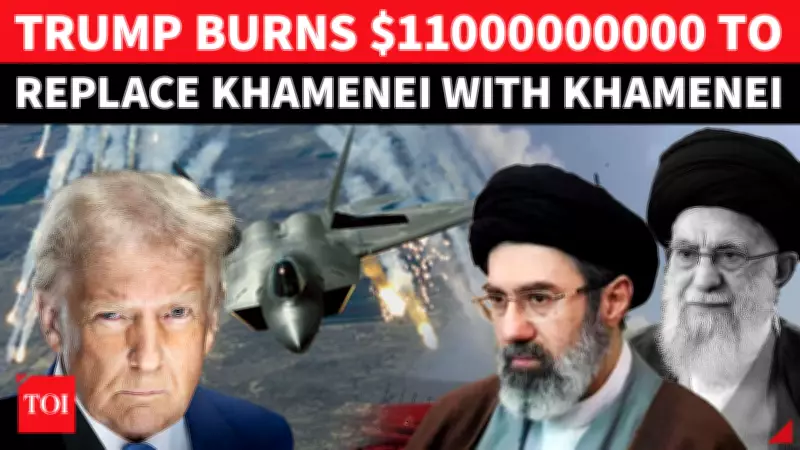
U.S. War Costs Skyrocket to $11.3 Billion in First Six Days of Iran Conflict
The United States' military engagement with Iran is already proving to be an extraordinarily expensive endeavor, with officials revealing that the initial six days of combat have drained at least $11.3 billion from American resources. This staggering financial toll underscores the rapid escalation and intensity of the hostilities unfolding across the Middle East.
Munitions Expenditure and Looming $50 Billion Request
In a detailed briefing to lawmakers, U.S. authorities disclosed that a massive $5.6 billion worth of munitions was expended in merely the first two days of the conflict alone. This explosive start has set the stage for what could become a protracted and costly war. The Trump administration is reportedly preparing to seek an additional up to $50 billion in emergency funding from Congress as the fighting intensifies, highlighting the severe strain on the nation's defense budget.
Trump's Victory Declaration Amidst Growing Skepticism
President Donald Trump has publicly asserted that the United States has "won" the opening phase of the military campaign, officially named Operation Epic Fury. He claimed that Iranian air force capabilities, radar systems, and missile infrastructure have been largely neutralized or destroyed. However, this declaration of triumph is being met with significant skepticism and concern from various quarters.

Critics and defense analysts are issuing stark warnings that the conflict with Iran risks spiraling into another long-term, financially draining war, reminiscent of past engagements in the region. They argue that initial battlefield successes do not necessarily translate to a sustainable or decisive victory, especially given Iran's demonstrated resilience and capacity for asymmetric warfare.
Iran's Defiant Stance and Regional Escalation
Despite the heavy U.S. bombardment and Trump's claims of dominance, Iran remains defiant and continues to mount a vigorous defense. Reports indicate that Iranian forces have launched retaliatory strikes, including drone attacks on strategic locations such as the Dubai Airport and other key infrastructure in the United Arab Emirates and Bahrain. These actions signal Tehran's unwavering commitment to resist American military pressure and its ability to project force across the region.
The situation remains highly volatile, with the potential for further escalation as both sides dig in. The enormous financial costs, coupled with the geopolitical complexities of the Middle East, suggest that the path to a resolution is fraught with challenges. As the war enters a critical phase, the international community watches closely, wary of the broader implications for global stability and security.






