

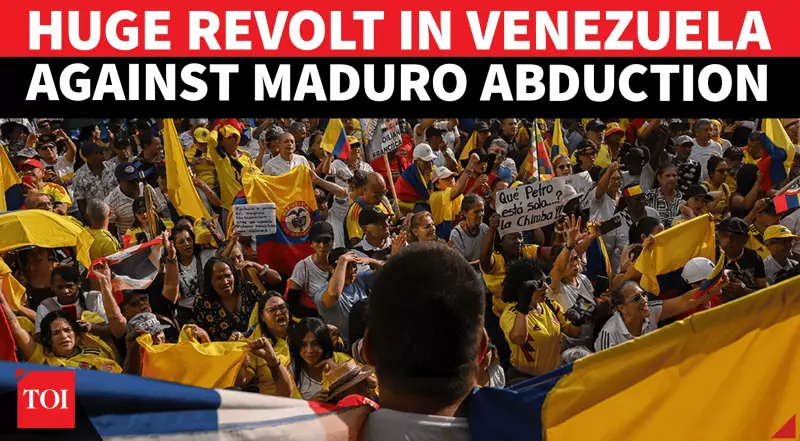
The streets of Venezuela's capital erupted in a massive show of defiance and grief as thousands of citizens rallied to demand the return of captured President Nicolas Maduro and First Lady Cilia Flores. The protests, marked by a sea of flags and angry banners, directly accused the United States of colonial aggression, amplifying a severe political crisis in Latin America.
Streets of Caracas Filled with Anger and Defiance
On January 8, 2026, central Caracas became the epicentre of national outrage. Protesters vociferously condemned the recent US military operation that led to the capture of the country's top leaders. Chants and placards rejecting American intervention filled the air, with a clear message of sovereignty. The rallying cry "We Don't Belong To Trump" echoed through the crowds, summarising the public sentiment against what they perceive as an imperial overreach by Washington.
A Nation in Mourning: Military Funerals and Civilian Casualties
The political protests coincided with a profound period of national sorrow. Authorities held mass military funerals for soldiers killed during the US-led operation. The government confirmed that the casualties were not limited to combatants; civilians were also among those killed, alongside dozens of Venezuelan and Cuban military personnel. This mix of military and civilian deaths has significantly intensified public anger and unified various segments of society against the foreign intervention.

In response to the losses, the Venezuelan government declared a seven-day national mourning period. Businesses across the country shut their doors as a mark of respect, and the general populace plunged into grief. The scale of the funerals and the official mourning period underscored the deep impact the event has had on the national psyche.
Escalating Tensions and Regional Implications
The events in Caracas signal a dramatic escalation in the long-standing tensions between Venezuela and the United States. The framing of the US action as "colonial" aggression taps into a deep historical resentment in the region and is likely to rally support beyond Venezuela's borders. The situation presents a major geopolitical flashpoint, with potential ripple effects across Latin America.
The public vow of defiance from the streets, combined with the state-declared mourning, sets the stage for a prolonged period of instability. The integration of Cuban military casualties further complicates the international dimension, suggesting a broader confrontation. As Caracas mourns and protests, the world watches to see how this direct clash of sovereignty and power will unfold.






