

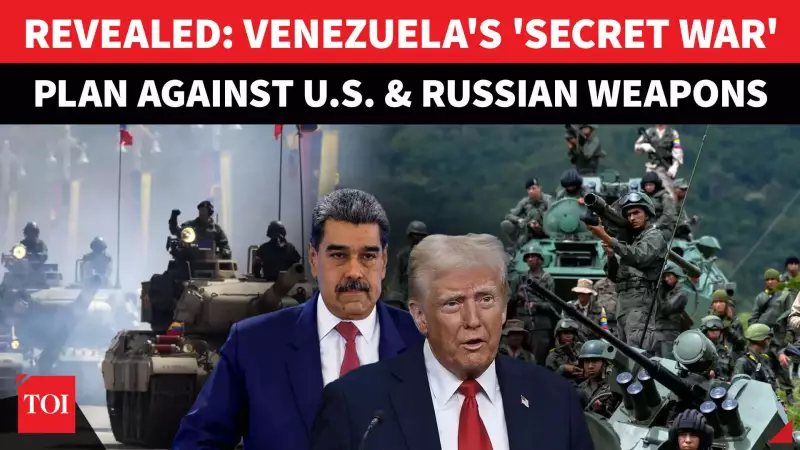
Venezuela is actively preparing for a potential military confrontation with the United States, developing a comprehensive national defence strategy focused on asymmetric warfare. This comes in response to heightened tensions following a declaration by U.S. President Donald Trump that labelled Venezuelan airspace as "closed," a move that has sparked significant concerns about an imminent escalation.
Core of the Resistance: Guerrilla Tactics and Sabotage
According to planning documents reviewed by the Reuters news agency, the Venezuelan strategy is built around a concept of "prolonged resistance." Instead of attempting to confront a technologically superior U.S. military force directly, the plan involves dispersing Venezuelan combat units across more than 280 sites nationwide. From these hidden locations, forces would launch coordinated hit-and-run attacks, aiming to wear down an invading force over time.
The strategy heavily relies on guerrilla warfare and establishing networks for sabotage. A key component of this defensive arsenal is the planned deployment of 5,000 Russian-made Igla man-portable air-defence systems (MANPADS). These shoulder-fired missiles would be used to target low-flying aircraft, posing a significant threat to U.S. air support and mobility.

The "Anarchization" Contingency Plan
Beyond the conventional guerrilla approach, reports indicate a second, more controversial layer to Venezuela's preparations. Dubbed the "anarchization" plan, this contingency would be activated in the event of a successful invasion, particularly if the capital, Caracas, were to fall.
This plan involves activating pre-positioned intelligence cells and armed civilian groups within the city itself. Their objective would be to destabilise the occupying forces by creating chaos and continuing resistance from within, making any military victory for an invader costly and difficult to sustain.
Context and Implications of the Escalation
The trigger for this detailed military planning was the recent statement from U.S. President Donald Trump, which effectively declared Venezuela's airspace off-limits. This action, viewed as highly provocative by the Venezuelan government, has been interpreted in Caracas as a potential prelude to direct military intervention.
The situation underscores the deepening geopolitical rift involving Venezuela, the United States, and Russia. The reliance on Russian military hardware, like the Igla missiles, highlights Moscow's continued support for the Venezuelan government amidst intense international pressure and sanctions from the West.
Analysts suggest that Venezuela's strategy acknowledges its inability to win a traditional, head-on war. Therefore, the aim is to make any potential invasion so protracted and painful that it becomes politically unsustainable for the United States. The plans reveal a nation bracing for a worst-case scenario, opting for a long-term, decentralised resistance model over a conventional battlefield defeat.






