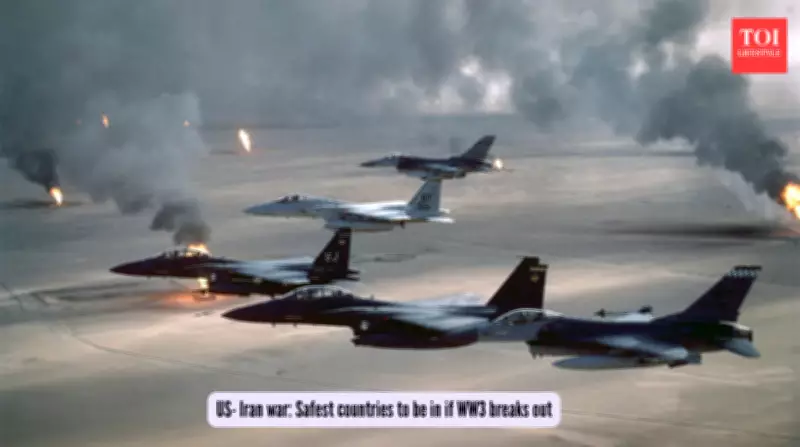
Global Tensions Escalate After RAF Base Attack in Cyprus
The world currently finds itself in a state of heightened anxiety, with daily news cycles dominated by reports of military strikes, targeted bases, and escalating warnings from global leaders. The ongoing conflicts in the Middle East have left many feeling powerless, prompting individuals worldwide to scrutinize maps and ponder a critical, unsettling question: What if the situation spirals into a full-scale, global confrontation?
Historical precedent demonstrates that wars can irrevocably alter lives in an instant. Yet, throughout history, humanity has consistently sought out havens—places of safety to retreat from chaos. This search for security has become particularly urgent in the current climate.
RAF Akrotiri Drone Strike Ignites World War III Fears
Fears of a potential Third World War have intensified significantly following a suspected drone attack on RAF Akrotiri in Cyprus. The incident occurred in the early hours of March 2, 2026. A spokesperson for the UK Ministry of Defence confirmed the event, stating, "Our Armed Forces are responding to a suspected drone strike at RAF Akrotiri in Cyprus at midnight local time."

The spokesperson further elaborated, "Our force protection in the region is at the highest level, and the base has responded to defend our people. This is a live situation, and further information will be provided in due course." This report was corroborated by information from LADbible.
This attack unfolds against a backdrop of already severe tensions. The Middle East conflict has now entered its third consecutive day, with the United States and Israel continuing strikes against Iran, actions that persist even following the recent death of Iran's Supreme Leader, Ayatollah Ali Khamenei.
Identifying Global Havens: The Safest Countries in a Major Conflict
In light of these developments, analysts and survival experts have turned their attention to identifying nations that might offer relative safety should a large-scale war erupt. These designations are based on a careful evaluation of several key factors, including official peace rankings, geographical advantages, and historical political neutrality, as detailed in a comprehensive LadBible report.
Here is an expanded list of countries considered among the safest, based on current assessments:

- Iceland: Topping the Global Peace Index, Iceland boasts a history free from invasion or major warfare. Its isolated position in the North Atlantic provides a natural buffer from continental European conflicts.
- Switzerland: The epitome of political neutrality, Switzerland is protected by the formidable Alps and maintains extensive civil defense infrastructure, including nuclear bunkers. Its policy of refusing arms shipments helps it avoid making international enemies.
- New Zealand: Ranking second in global peace, New Zealand's safety is derived from its geographical remoteness from active conflict zones like the Middle East and Ukraine, supplemented by its mountainous terrain.
- Tuvalu: This remote Pacific island nation, home to merely 11,000 people and situated between Hawaii and Australia, is considered safe largely because it lacks the natural resources that typically attract aggressors.
- Indonesia: Maintaining a firm stance of neutrality and political independence, Indonesia consistently prioritizes diplomatic peace and stability in its foreign policy.
- Bhutan: This Himalayan kingdom declared its permanent neutrality upon joining the United Nations in 1971. Its safety is further ensured by its formidable high-altitude mountain ranges.
- Argentina: Having endured past conflicts like the Falklands War, Argentina has developed resilience. It is also a major agricultural producer, cultivating robust crops like wheat that are resistant to famine conditions.
- Chile: Stretching over 4,000 miles along the rugged Pacific coast and Andes mountains, Chile benefits from natural defensive barriers, coupled with strong national infrastructure and abundant natural resources.
- Fiji: Located approximately 2,700 miles from Australia, Fiji maintains only a minimal military force of around 6,000 soldiers. It enjoys a high peace index ranking and is self-sufficient with its rich forests and fisheries.
- South Africa: Offering significant advantages in a crisis, South Africa provides abundant food supplies, plentiful fresh water, fertile agricultural soil, and generally reliable infrastructure networks.
- Antarctica: Representing the most extreme potential refuge, the Antarctic continent covers 14 million square kilometers and is situated far from likely nuclear targets. However, its brutally freezing climate presents a monumental survival challenge.
These locations—from remote islands and neutral nations to rugged mountain territories—represent more than just picturesque destinations. In today's volatile geopolitical landscape, they are increasingly viewed as practical components of long-term survival strategy for those fearing a descent into wider war.