

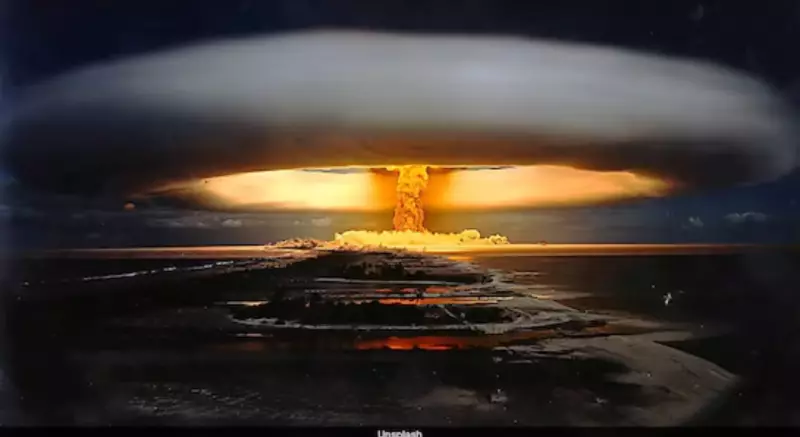
In an era of escalating international tensions, many Indians are quietly asking themselves a disturbing question: if World War III erupts, which places on Earth might offer genuine safety? This uncomfortable thought emerges during news alerts about diplomatic crises and late-night doomscrolling sessions.
Why Global War Fears Are Growing Again
International tensions have reached their highest point in decades, creating widespread anxiety about potential global conflict. The ongoing war in Ukraine continues to destabilize European security while raising fears of direct NATO-Russia confrontation. Meanwhile, Middle Eastern hostilities between Israel and neighboring states fluctuate between diplomatic friction and open threats.
China's persistent rhetoric about future "reunification" with Taiwan increases the possibility of confrontation in the South China Sea, potentially drawing in the United States. North Korea compounds these worries with regular ballistic missile tests and public nuclear posturing.

Modern warfare would look completely different from past conflicts, likely involving hybrid tactics, cyber attacks, supply-chain sabotage, satellite interference, and possibly nuclear exchange. This isn't mere speculation—scientific research published in Nature Food modeled the agricultural impact of nuclear conflict and concluded the aftermath could starve up to 6.7 billion people worldwide due to atmospheric soot and long-term crop failure.
Which Countries Offer the Best Protection?
Despite the grim predictions, some regions possess natural advantages that could improve survival odds. The same nuclear impact study highlighted that certain areas, particularly in South America, Oceania and isolated Northern regions, have agricultural resilience and geographical insulation that would help them weather global catastrophe.
These findings align with independent assessments by global risk monitors like the Global Peace Index, which evaluates nations based on stability, neutrality, conflict exposure and self-sufficiency. A news.com.au analysis recently compiled a list of potential safe havens using additional criteria including geography, military alignment, distance from likely strike zones, civil-defence infrastructure, and core self-sufficiency in energy and food production.
No country would be perfectly safe in a world war, as historians and strategic analysts emphasize that safety depends on conflict type, nuclear targeting strategy, alliance networks, wind-borne fallout, and trade collapse. History shows that even neutral nations can become victims of geography or convenience, as demonstrated when Belgium, Luxembourg, the Netherlands, and Norway were invaded in 1940 despite their declared neutrality.
The Most Frequently Cited Safe Havens
Analysts consistently point to several nations when modeling survivability in extreme war scenarios. New Zealand tops many lists due to its extreme remoteness, thousands of kilometers from major population centers and nuclear powers. Consistently ranked among the most peaceful nations and agriculturally self-sufficient, it's often suggested as a potential "human civilization restart-zone."
Western Australia, particularly Perth, appears in similar discussions as the most isolated major city on Earth. Australia exports more food than it consumes, and its physical distance from NATO countries, Russia, China and US military spheres makes it statistically less likely to be targeted in intercontinental conflict.
Iceland ranks number one on the Global Peace Index and sits in the middle of the North Atlantic away from continental strike paths. Its immense geothermal energy reserves and historical neutrality make it an unlikely target despite having no standing army.
In South America, Chile, Argentina and Uruguay are frequently highlighted as they're buffered by the Andes mountains and Pacific Ocean, placing them far outside blast and fallout trajectories of Northern-Hemisphere conflicts. Brazil and Paraguay also appear in agricultural resilience models as regions capable of sustaining domestic populations even after global market collapse.

African nations like Botswana receive mentions for being politically non-aligned, rich in natural resources, and geographically positioned deep in the Southern Hemisphere. Namibia and parts of South Africa also feature in survival simulations due to their distance from geopolitical flashpoints.
In Asia, Bhutan stands out with its declared neutrality since 1971, landlocked Himalayan position, and cultural detachment from military blocs. Indonesia represents another example with its "free and active" foreign policy and distance from mainline US-China confrontation zones.
Experts repeatedly stress that these are not promises of immunity. Safety ultimately depends on conflict nature—whether nuclear, conventional or cyber-economic—and even Southern Hemisphere nations could suffer from fallout patterns and climate effects. The uncomfortable reality remains that in a true world war, nowhere on Earth would be entirely untouched, but some locations would likely endure better than others due to geography, politics and self-sufficiency.





