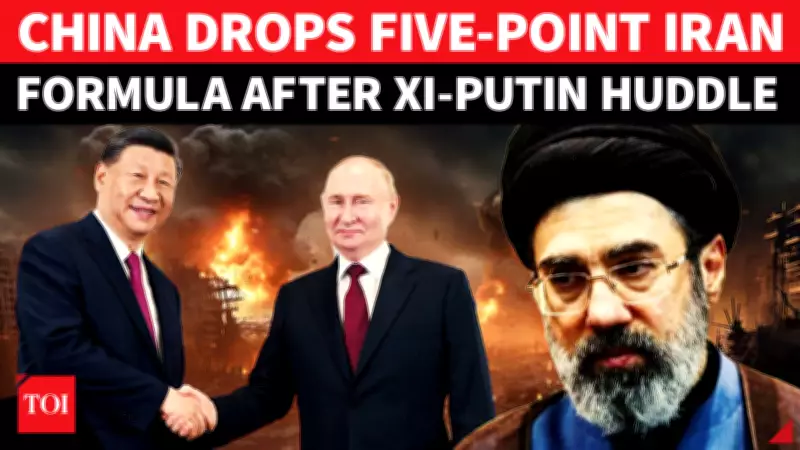
A dramatic new twist has emerged in the Iran-US crisis after reports indicated that a secret Sino-Pakistani framework may be shaping a potential ceasefire deal. Diplomatic sources revealed that China and Pakistan have proposed a sweeping regional roadmap involving the Strait of Hormuz, sanctions relief, frozen Iranian assets, and a new Gulf security structure that could weaken US dominance in the region.
China's 5-Point Iran Formula
The explosive proposal reportedly pushes Washington into accepting a multi-power order where Beijing, Moscow, and regional players gain major influence over the post-war Middle East. The plan includes five key points: ensuring freedom of navigation in the Strait of Hormuz, gradual sanctions relief for Iran, unfreezing of Iranian assets, establishment of a new Gulf security architecture, and a ceasefire monitoring mechanism involving China and Pakistan as principal mediators.
Strategic Implications
This move effectively sidelines former US President Donald Trump, who had advocated for a hardline stance against Iran. By floating its own formula, China positions itself as a key diplomatic player in the region, challenging the traditional US-led order. The involvement of Pakistan, a close ally of both China and Saudi Arabia, adds credibility to the proposal.

Analysts suggest that this development could lead to a significant shift in Middle Eastern geopolitics, with China and Russia gaining more leverage. The US may be forced to accept a diminished role, as regional powers like Iran, Saudi Arabia, and the UAE are expected to support the Chinese-led initiative.
Reactions and Next Steps
While official responses from Washington and Tehran are awaited, initial reports indicate that Iran has welcomed the proposal, viewing it as a more balanced approach than previous US-led negotiations. Israel, however, has expressed concerns over the potential weakening of US influence and the inclusion of Iran in regional security discussions.
The coming weeks will be crucial as diplomatic channels intensify. If successful, this could mark a historic shift in how Middle Eastern conflicts are resolved, with China emerging as a global mediator.