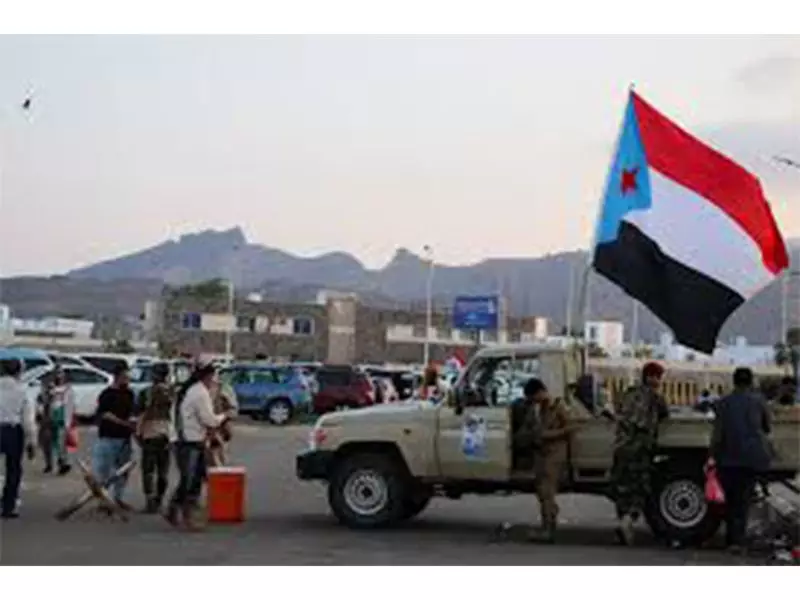
In a significant development within Yemen's protracted civil war, the internationally recognized government, backed by Saudi Arabia, has successfully reclaimed control over two crucial eastern provinces. This strategic move sees government forces taking back Hadramout and Al Mahra from the grip of the UAE-supported Southern Transitional Council (STC).
A Swift Military and Administrative Takeover
The retaking of these territories was executed through a combination of military and administrative measures. According to sources within the Yemeni government, the process involved the formal dismissal of local authorities who were loyal to the STC. These officials were subsequently replaced by appointees directly answering to the central government based in the temporary capital of Aden.
This transition of power appears to have been conducted with minimal immediate armed conflict, suggesting prior negotiations or a calculated power play. The STC, which has long sought independence or greater autonomy for southern Yemen, has not mounted a significant public resistance to this takeover, indicating a possible shift in the complex alliances that define the war.

The Geopolitical Chessboard: Saudi Arabia and UAE Interests
This development underscores the often-fractured nature of the coalition that has been fighting against the Houthi rebels. While both Saudi Arabia and the United Arab Emirates are key members of the coalition, they have backed different factions within Yemen. Saudi Arabia supports the official government of President Abd Rabbu Mansour Hadi, while the UAE has provided substantial support to the STC and its southern separatist ambitions.
The recapture of Hadramout and Al Mahra represents a clear strengthening of the Saudi-backed government's position and a corresponding setback for UAE influence in these regions. Hadramout, in particular, is geopolitically and economically vital due to its extensive coastline along the Arabian Sea and its oil resources.
Implications for Yemen's Future and Regional Stability
The consolidation of government control in the east has several potential consequences. Firstly, it may lead to a more unified front against the Houthi forces who control the north and west, including the capital Sanaa. However, it also risks inflaming tensions with southern separatist groups who may view this as an aggressive move by the northern-based government.
Secondly, this shift could impact the fragile peace processes and negotiations. It potentially strengthens the hand of the Riyadh-backed government in any future talks, while possibly marginalizing the STC's demands. The long-term stability of Yemen hinges on managing these internal rivalries within the anti-Houthi bloc as much as on resolving the primary conflict with the Houthis themselves.
For regional powers, this event highlights the ongoing struggle for influence in Yemen's future. The strategic provinces of Hadramout and Al Mahra are now firmly under the administration of the Saudi-aligned government, altering the balance of power in the south and potentially reshaping the roadmap for Yemen's political resolution.