In a major escalation of Yemen's complex internal conflict, the Southern Transitional Council (STC) has declared a definitive plan to establish an independent state in the country's south. The secessionist group announced a two-year roadmap to achieve full independence, a move that directly challenges the Saudi-backed Presidential Leadership Council (PLC) and threatens to fracture the fragile anti-Houthi alliance.
Roadmap to Sovereignty Amidst Renewed Violence
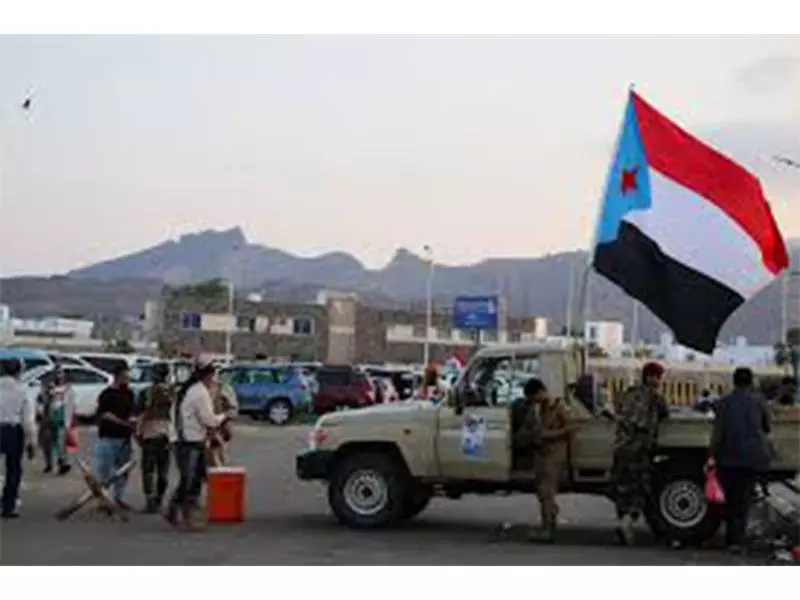
The announcement came against a backdrop of intense fighting in the strategic port city of Aden, the STC's de facto capital. Clashes erupted between STC forces, known as the Security Belt, and troops loyal to the internationally recognized government. The violence, which included artillery exchanges in the Crater district, underscores the deep divisions that persist despite years of a Saudi-led coalition campaign against the Houthi rebels in the north.
The STC's plan, as outlined by its leadership, is structured and time-bound. The group aims to achieve complete independence for South Yemen within a 24-month timeframe. This process involves consolidating administrative and military control over southern governorates, building state institutions, and seeking international recognition. The declaration represents a significant hardening of the STC's position, moving beyond demands for autonomy to a clear goal of sovereign statehood.

Fracturing the Saudi-Backed Alliance
This development poses a severe challenge to Saudi Arabia, which has led a coalition supporting the Yemeni government since 2015. Riyadh has invested significant diplomatic effort to maintain a unified front between the PLC and the STC against the common Houthi enemy. The STC's unilateral announcement of an independence plan shatters this uneasy coalition and complicates Saudi Arabia's strategic objectives in the region.
The Presidential Leadership Council, chaired by Rashad al-Alimi, has categorically rejected the STC's secessionist plan. The PLC, based in Aden but with limited actual control, views the move as a rebellion that undermines Yemen's territorial integrity and the legitimacy of its government. This rejection sets the stage for further military and political confrontations between the two nominal allies, potentially opening a new, debilitating front in Yemen's multi-layered war.
Regional Implications and a Precarious Future
The push for southern independence is not a new phenomenon but has gained substantial momentum in recent years. The STC, backed by the United Arab Emirates (UAE), has effectively governed much of the south, including Aden, since seizing control in 2019. The new two-year plan signals a decisive break from the Riyadh Agreement, a Saudi-brokered power-sharing deal intended to quell previous infighting.
The implications are profound for regional stability and international diplomacy. A formal split could lead to:
- Prolonged internal conflict between southern separatists and government forces.
- A weakened position for the anti-Houthi coalition, potentially benefiting the Iran-aligned Houthi movement.
- Complications for crucial humanitarian aid delivery in a country already facing one of the world's worst humanitarian crises.
- Increased volatility in the strategic Bab el-Mandeb Strait, a vital global shipping lane.
As the STC begins its countdown to independence, the path ahead is fraught with uncertainty. The move ensures that Yemen's future will be shaped not only by the war against the Houthis but also by an intensifying struggle for the soul and sovereignty of its southern regions. The international community, particularly key players like Saudi Arabia, the UAE, and the United States, now faces the difficult task of navigating this fresh crisis within a crisis.