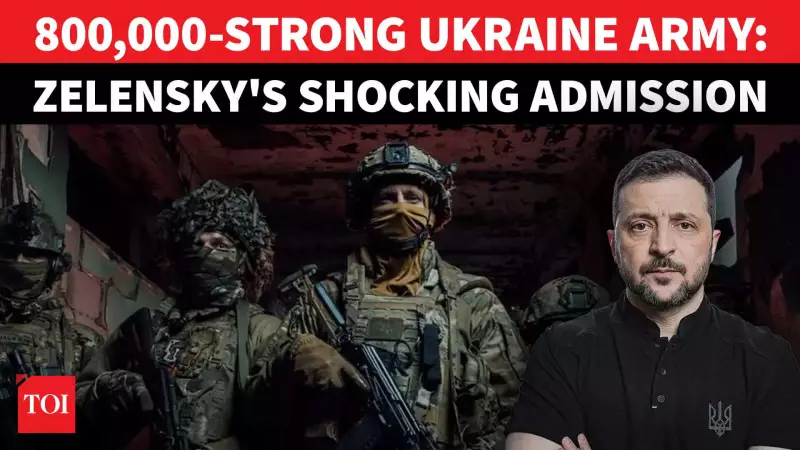
In a strikingly frank assessment, Ukrainian President Volodymyr Zelensky has laid bare the severe economic constraints his nation will face after the war, stating that Ukraine cannot independently finance a military of 800,000 troops. This admission shifts the focus to the long-term security guarantees and financial burdens expected to fall on Western allies.
A Candid Admission on Military Financing
Speaking to journalists, President Zelensky confirmed that Kyiv lacks the financial resources to sustain such a massive force once the current conflict concludes. Consequently, Ukraine plans to formally ask its Western partners to partially fund its military for the foreseeable future. This revelation, made on December 23, 2025, throws a spotlight on the daunting economic challenges of post-war reconstruction and defence.
Clashing Visions for Post-War Security
Zelensky's comments arrive amid a significant debate over Ukraine's future security architecture. Reports indicate that an initial U.S. peace plan proposal, likely shaped by the potential return of Donald Trump to the presidency, suggested capping Ukraine's armed forces at 600,000 troops. However, both Ukrainian and European leaders are pushing back against this limit. They argue that a larger army is non-negotiable for ensuring the nation's long-term security and deterring future aggression from Russia.

The gap between the proposed U.S. troop cap and Ukraine's desired force strength of 800,000 highlights a fundamental disagreement on the scale of security needed. Zelensky's admission that Ukraine cannot pay for its own vision essentially passes the financial question to the European Union and other allies, asking: Who will pay for Ukraine's peace?
The Broader Implications and Unanswered Questions
This development raises critical new questions on multiple fronts:
- Ukraine's Economic Limits: The admission underscores the devastating impact of the war on Ukraine's economy, making it reliant on external support not just for rebuilding but for core sovereign functions like defence.
- Depth of Western Commitments: It tests the endurance and depth of Western promises for long-term security guarantees. Are partners prepared to open their treasuries for years, possibly decades, to fund another nation's army?
- The True Cost of Security: The episode forces a concrete discussion about the staggering financial price of post-war security in Eastern Europe, moving from abstract promises to hard numbers and budget allocations.
President Zelensky's rare candour has effectively framed the next phase of geopolitical negotiations. The conversation is no longer just about weapons for today's battle but about sustaining a formidable defence for tomorrow's peace. The world now waits to see how the West, particularly a potentially Trump-led U.S. and a burden-sharing EU, will respond to this direct call for shared financial responsibility for Ukraine's future security.