

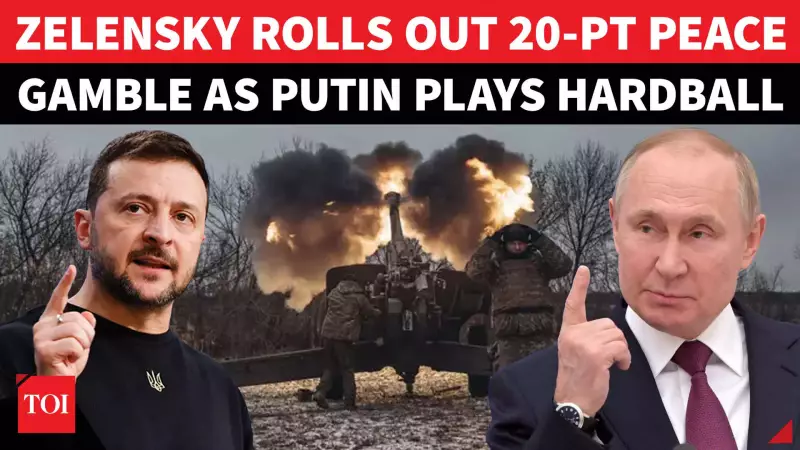
In a significant development that could signal a potential shift in the ongoing conflict, Ukrainian President Volodymyr Zelensky has presented a comprehensive new peace proposal to Moscow. The 20-point framework, unveiled after months of strategic consultations with the United States, outlines a path to potentially freeze the war along current frontlines.
Details of the Proposed Peace Framework
The plan, made public on December 25, 2025, calls for the withdrawal of Russian military forces from several occupied regions in Ukraine. A key element involves freezing the active conflict along the existing battle lines in the eastern and southern parts of the country. While offering this concession, President Zelensky has firmly stated that Kyiv will not stand in the way of peace. However, he issued a clear warning, emphasising that Russia must approach any negotiations with genuine seriousness for the plan to succeed.
Key Components and International Involvement
The sweeping proposal is not limited to troop movements. It includes several critical elements designed to ensure long-term stability and recovery for Ukraine. A major point is the request for Western-style security guarantees, likely involving commitments from NATO or individual allied nations. Another crucial aspect is the proposed joint management of the Zaporizhzhia nuclear power plant by the United States and Ukraine, addressing one of the most dangerous flashpoints of the war. Furthermore, the plan envisions a massive international aid package for the reconstruction of Ukraine's devastated infrastructure and cities.

Moscow's Response and the Road Ahead
As of now, the Kremlin has not issued an official response to the detailed 20-point plan. Russian officials have consistently maintained that any peace agreement must reflect the realities on the battlefield. This stance suggests that Moscow will scrutinise the proposal, particularly the terms regarding territorial control and security arrangements. The international community is watching closely to see if this proposal, which represents a notable shift from Ukraine's earlier demands, can become the basis for a new round of substantive diplomacy and potentially end Europe's largest land war in decades.






