

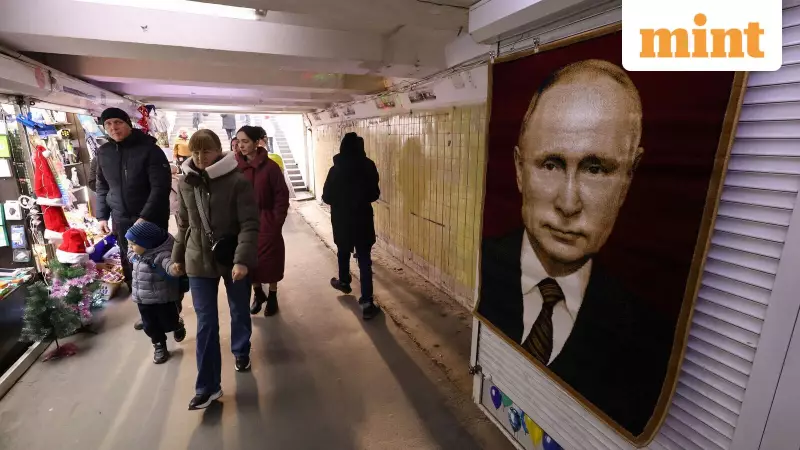
After 1,398 days of a devastating military conflict initiated by Russia against Ukraine, a new diplomatic blueprint for peace has emerged. Kyiv, in collaboration with Washington, has formulated a condensed 20-point plan aimed at ending the hostilities that have claimed countless lives and displaced thousands. This revised document, pared down from an initial 28 points, has now been formally presented to Moscow for its crucial feedback, placing the spotlight firmly on Russian President Vladimir Putin.
The Core Framework of the Proposed Agreement
Ukrainian President Volodymyr Zelensky outlined the plan's foundation, which begins with a strong reaffirmation of Ukraine's sovereignty, to be endorsed by all signatory states. The proposal is built around an unconditional non-aggression pact between Ukraine and Russia. A cornerstone of the deal involves robust security guarantees for Ukraine from the United States, NATO, and European partners, designed to function similarly to NATO's Article 5 collective defence clause.
These guarantees come with clear conditions: a renewed Russian invasion would trigger the automatic reinstatement of all global sanctions against Moscow. Conversely, the guarantees would be voided if Ukraine were to launch an unprovoked attack on Russian territory. The plan also mandates that Russia formalises a policy of non-aggression towards Ukraine and Europe in its laws and ratification documents.

Post-War Recovery and Key Sticking Points
Looking beyond the ceasefire, the plan charts a course for Ukraine's future. It promises a defined path to European Union membership, coupled with short-term privileged access to the EU market. A substantial global development package and several dedicated funds are proposed to address the monumental tasks of economic recovery, reconstruction of devastated regions, and humanitarian crises. Furthermore, Ukraine commits to accelerating a free trade agreement with the US post-ceasefire and reaffirms its status as a non-nuclear state.
However, the plan navigates complex and contentious issues. It proposes joint Ukrainian, American, and Russian operation of the Zaporizhzhia Nuclear Power Plant. On the critical question of territory, the agreement recognises the current front lines in the Donetsk, Luhansk, Zaporizhzhia, and Kherson regions as the line of contact at the time of signing. It commits both sides not to alter any future territorial arrangements by force and ensures Russia will not block Ukraine's commercial use of the Dnipro River and the Black Sea.
Implementation and the Ultimate Hurdle
The implementation of this comprehensive plan would be monitored and guaranteed by a mechanism involving Ukraine, Europe, NATO, Russia, and the United States, with former President Donald Trump named as the guarantor. Violations would be met with sanctions. A full ceasefire would take immediate effect upon agreement by all parties.
The pivotal question remains: Will Vladimir Putin agree? The territorial dispute is the most significant obstacle. Russia has annexed Ukrainian territories in Donbas but not fully conquered them. President Zelensky has firmly stated that Kyiv will not recognise these annexations, warning of the dangers of accepting "Russian history of madness." In stark contrast, President Putin has been adamant, insisting the world must acknowledge Russia's wartime gains and vowing to secure what he calls historical Russian lands by military means if necessary. While the 20-point plan acknowledges the existing front lines, it does not explicitly recognise Russia's annexations, setting the stage for a critical diplomatic showdown.






