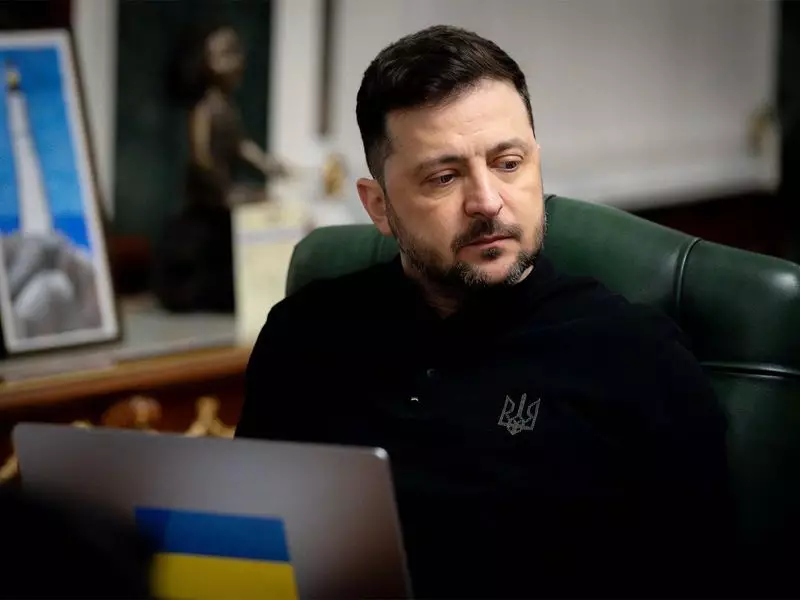
Ukrainian President Volodymyr Zelenskyy has launched a sharp critique against Belarus, accusing its leadership of effectively surrendering the nation's sovereignty to serve Russia's aggressive ambitions in the region. The statement, made during his nightly video address on Friday, underscores the deepening geopolitical rift triggered by the ongoing war in Ukraine.
A Stark Accusation from Kyiv
In a direct and forceful condemnation, President Zelenskyy stated that Belarusian President Alexander Lukashenko has compromised his country's independence. "He has already surrendered the sovereignty of his country to Russia," Zelenskyy declared, framing the alliance as one where Minsk no longer acts out of its own national interest but as a subordinate to Moscow's expansionist goals. This accusation points to the perceived role of Belarus as a launchpad for Russian military operations against Ukraine, a critical factor since the initial invasion in February 2022.
The Ukrainian leader's remarks highlight a significant strategic concern. He argued that by allowing Russian forces to use Belarusian territory and infrastructure, the Lukashenko regime is not merely a cooperative neighbour but a participant in an aggressive campaign. This, according to Zelenskyy, fundamentally undermines Belarus's status as an independent state and transforms it into a de facto extension of Russian military planning.

The Context of Military Cooperation
The relationship between Moscow and Minsk has been formalized through a series of agreements establishing a "joint military grouping" and granting Russia extended access to Belarusian bases. These developments are not seen as defensive pacts by Kyiv and its Western allies, but as escalatory steps that consolidate Russian influence and threat projection across Eastern Europe.
Zelenskyy's address specifically tied these actions to the broader pattern of Russian aggression. He suggested that the Kremlin's ambitions extend beyond Ukraine, using partnerships like the one with Belarus to destabilize the entire region. The creation of permanent Russian military facilities on Belarusian soil is viewed as a long-term strategic move, diminishing Minsk's control over its own territory and security affairs.
Implications for Regional Security
This public accusation carries weighty implications for the security architecture of Eastern Europe. It reinforces the narrative that the war in Ukraine is part of a larger contest for influence, where the sovereignty of smaller states is under pressure. By calling out Belarus directly, Zelenskyy aims to isolate the Lukashenko government internationally and highlight the risks of alignment with Moscow's military objectives.
The situation presents a complex challenge. For Belarus, the alliance with Russia offers security guarantees for the regime but at the apparent cost of autonomous decision-making. For Ukraine, a friendly and independent Belarus would be a crucial security buffer; a Belarus fully integrated into Russian military command is a persistent northern threat. The dynamics of this relationship will continue to be a focal point in assessing the stability and future of the region long after the active conflict subsides.
Ultimately, Zelenskyy's stark words serve as both a condemnation and a warning. They condemn the Lukashenko government's choices as a betrayal of national sovereignty and warn other nations in Russia's periphery of the potential consequences of such deeply asymmetrical partnerships. The address solidifies the view from Kyiv that the battle for Ukraine is inextricably linked to a broader struggle for the political future of Eastern Europe.