

As the world steps into 2026, the prevailing mood for many is a potent mix of apprehension and foreboding. The future, for numerous observers, appears shrouded in a fog of dread and paranoia, a sentiment powerfully articulated by political theorist Lea Ypi in her reflections on the year ahead. Drawing from her unique perspective—born in Albania's isolated communist past and now a professor in the UK—Ypi navigates the parallels between historical isolationism and today's fragmenting world order.
A Haunting Echo from Albania to Brexit Britain
The author recalls a provocative moment when Jeremy Corbyn, then leader of the UK's Labour Party, quoted a New Year's address from Enver Hoxha, Albania's infamous communist dictator. "This year will be tougher than last year," Corbyn said, echoing Hoxha's addendum, "On the other hand, it will be easier than next year." The quote sparked outrage, seen by some as evidence of Marxist leanings and by others as an insult to those who suffered under Albania's brutal regime.
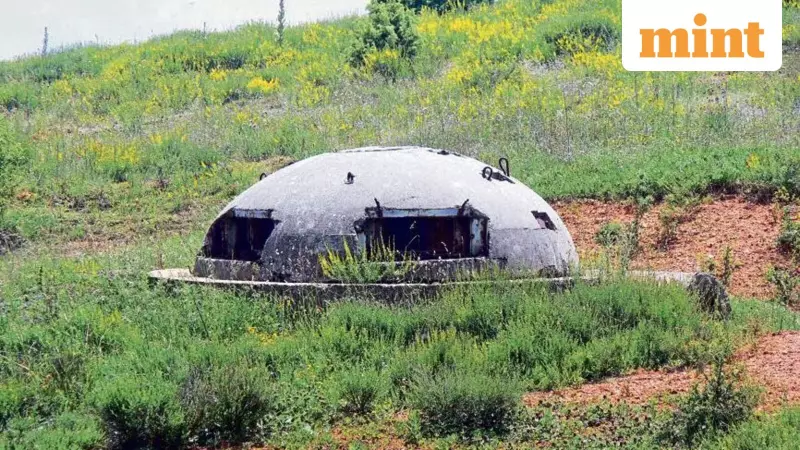
Under Hoxha, Albania was sealed off from the world, a nation sustained by propaganda, surveillance, and a siege mentality that invested heavily in bunkers against imagined foreign threats. Each new year brought fresh shortages and paranoia. Yet, Ypi notes, Corbyn's use of that darkly humorous quote has proven oddly prescient for the political left since 2016, capturing a creeping gloom that began with the Brexit referendum.

The Decade of "Taking Back Control" and Global Fracture
In 2026, Brexit will mark its tenth anniversary, a significant milestone. What began as a debate over sovereignty has degenerated, Ypi argues, into a narrative where control is deemed impossible due to external threats and internal 'others'. The initial panic over empty supermarket shelves may have been premature, but the referendum signaled a deeper shift: a return to a world of increasingly isolated states, weakened institutions, and a declining rule of law.
The year ahead promises little deviation. The only reliably expanding markets are in the military sector, and technological innovation seems focused on perfecting mutual destruction. In this landscape, Ypi asks: Where can one still find hope?
Kant's Conjecture and Europe's Lost Dream
To answer this, Ypi turns to the 18th-century German philosopher Immanuel Kant. In his 1784 essay, Kant sought a pattern in history beyond violence and irrationality. Paradoxically, he saw in war's escalating destructiveness and economic unsustainability a path to hope. He predicted that sheer exhaustion would eventually drive nations toward a cosmopolitan federation—a prediction that found a real, though imperfect, embodiment in the European Union.
The EU's intellectual roots trace back to the Ventotene Manifesto, written in 1941 by Altiero Spinelli and Ernesto Rossi while imprisoned by Mussolini. They envisioned a federal Europe where states were bound by cooperation, not conquest. This dream fueled the project through the mid-2000s, a time of hope when Europeans debated a continental constitution.
The New Reality: Bunkers, Borders, and Meloni's Vision
Today, Ypi observes, that dream lives on most vividly in an unlikely place: Albania. For Albanians, the ideal epoch is the EU of the 1990s, and the nation fervently aligns its laws with the EU's Acquis communautaire in hopes of joining. Yet, on its coast, detention centers built by Italy for deported asylum seekers symbolize the harsh new European reality.
This reality was starkly defined by Italian Prime Minister Giorgia Meloni in a March 2025 speech. She directly repudiated the Ventotene Manifesto's call to abolish national sovereignty, stating, "I don't know if this is your Europe, but it is certainly not mine." Ypi contends that today's Europe resembles Meloni's vision more than the early federalists' dream. The elite now applaud her "migration management" and flatter figures like Donald Trump for minor trade gains. European Commission President Ursula von der Leyen's call to "rearm Europe" chillingly reminds Ypi of Albania's bunker-building campaigns.

Hope Without Optimism: A Moral Duty for 2026
Concluding, Ypi returns to Kant's reminder that human affairs, driven by freedom, cannot be predicted with certainty. Therefore, she chooses not to speculate but to advocate for hope—specifically, the "hope without optimism" described by Václav Havel. This hope is a moral duty, sustained even when outcomes appear bleak. It is the hope of seeing cosmopolitan ideals return to Europe's streets in defence of migrant rights and against war machinery.
Progress is never guaranteed, but it remains possible if we act as if it were. As we face 2026, reviving the spirit of resistance that birthed the Ventotene Manifesto's vision may be our best path forward. The only prophecy that can come true, Ypi concludes, is the one we help bring about ourselves.





