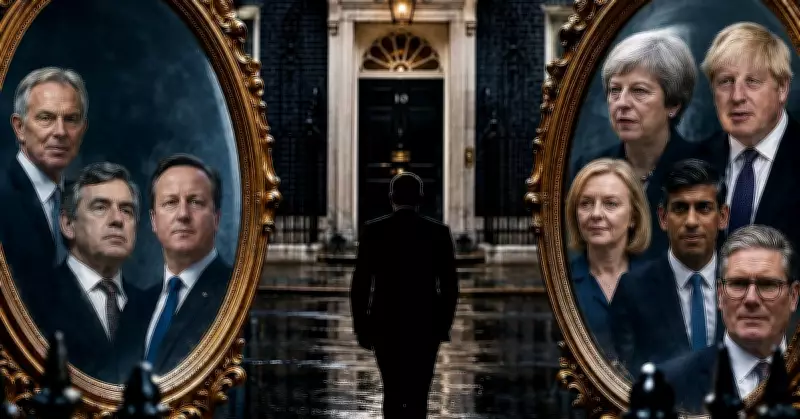
The United Kingdom has experienced a period of unprecedented political instability, with six prime ministers occupying 10 Downing Street in the last decade. This rapid turnover marks a stark contrast to the relative stability of previous decades, and the Brexit referendum of 2016 is widely seen as the catalyst for this upheaval.
The Brexit Trigger and Its Immediate Aftermath
The 2016 referendum resulted in a narrow victory for the Leave campaign, triggering the resignation of then-Prime Minister David Cameron. His successor, Theresa May, took on the monumental task of negotiating the UK's withdrawal from the European Union. May's tenure was dominated by the Brexit process, which proved deeply divisive within her own Conservative Party and the country at large. After failing to get her withdrawal agreement through Parliament multiple times, she resigned in 2019.
Boris Johnson succeeded May, promising to "get Brexit done." He secured a revised deal and led the Conservatives to a landslide victory in the December 2019 general election. However, his premiership was later marred by scandals, including the "Partygate" revelations of lockdown-breaking gatherings, and a cost-of-living crisis.

A Rapid Succession of Leaders
Johnson's resignation in July 2022 triggered a leadership contest won by Liz Truss, who became the shortest-serving prime minister in British history after just 49 days. Her mini-budget, which proposed unfunded tax cuts, spooked financial markets, led to a sharp fall in the pound, and forced the Bank of England to intervene. Truss resigned in October 2022.
Rishi Sunak then took over, inheriting a struggling economy and a deeply divided party. Sunak's premiership has focused on stabilizing the economy, tackling inflation, and addressing issues such as illegal immigration. However, the Conservatives have consistently trailed in opinion polls behind the opposition Labour Party.
The 2024 General Election and Another Change
The political turmoil continued into 2024. Despite Sunak's efforts, the Conservatives suffered a heavy defeat in the July 2024 general election, losing to Labour led by Keir Starmer. Starmer became prime minister, marking the sixth change in leadership in a decade. The election result reflected widespread public frustration with the Conservatives' handling of the economy, public services, and Brexit-related issues.
According to political analysts, the revolving door at Downing Street has damaged the UK's international reputation and created a sense of uncertainty. "The constant churn of leaders has made it difficult for the UK to project a consistent message on the world stage," said Professor Tim Bale of Queen Mary University of London. "It has also hampered long-term policymaking, as each new prime minister has sought to put their own stamp on the agenda."
Impact on Governance and Public Trust
The instability has had tangible consequences. The UK has seen five different chancellors of the Exchequer since 2016, leading to frequent shifts in economic policy. Public trust in politicians has plummeted, with surveys showing that only a minority of Britons believe the political system works well. The constant leadership changes have also exacerbated the challenges of implementing Brexit, as each new government has had different priorities and approaches.
Looking ahead, Starmer's Labour government faces the daunting task of restoring stability and addressing the deep-seated issues that have plagued the UK. The legacy of the past decade, however, will likely be one of turmoil and a stark reminder of the consequences of political division.