

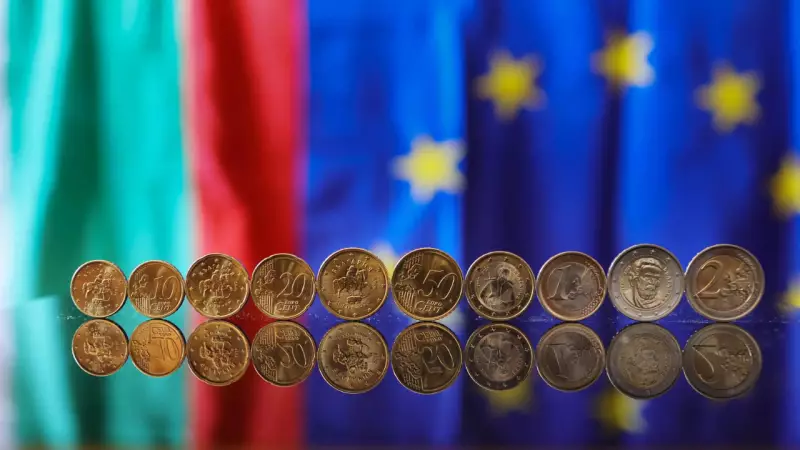
In a landmark financial and political shift, Bulgaria formally embraced the euro as its official currency on Thursday, marking its entry as the 21st member of the prestigious Eurozone. This pivotal moment arrives nearly two decades after the Balkan nation first joined the European Union, concluding the long reign of its historic lev currency.
A Midnight Transition Marked by Hope and Anxiety
At the stroke of midnight, Bulgaria bid farewell to the lev, a currency symbol deeply rooted in its history since the late 19th century. The central bank building in Sofia, the capital, was illuminated with projections of the new Bulgarian euro coins to commemorate the transition. The nation of 6.4 million people stepped into the Eurozone as New Year celebrations unfolded, a mix of optimism and widespread anxiety over inflation and ongoing political instability colouring the atmosphere.
European Central Bank President Christine Lagarde extended a warm welcome, stating, "I warmly welcome Bulgaria to the euro family." She hailed the euro as a powerful emblem of "shared values and collective strength." For some citizens, the change was immediate. Dimitar, 43, successfully withdrew 100 euros from an ATM shortly after midnight, exclaiming, "Great! It works!"

Political Backing Meets Public Skepticism
Successive Bulgarian governments have championed euro adoption, viewing it as a strategic move to strengthen Western ties, boost the economy of the EU's poorest member state, and provide a buffer against Russian influence. However, public sentiment has been sharply divided. A significant portion of the population fears the switch will trigger price hikes and exacerbate political uncertainty.
Outgoing Prime Minister Rossen Jeliazkov attempted to calm these fears, appealing for public "tolerance and understanding" and asserting that inflation was not a direct consequence of adopting the euro. Yet, official data revealed food prices in Bulgaria rose by 5% year-on-year in November, more than double the Eurozone average, fueling public concern.
President Rumen Radev, speaking just before the switch, called it the "final step" in Bulgaria's EU integration. However, he also expressed regret that the decision was made without a public referendum. "This refusal was one of the dramatic symptoms of the deep divide between the political class and the people," Radev stated, referencing mass demonstrations across the country.
Navigating a Turbulent Political Climate
The currency transition occurs during a period of significant political turmoil. A conservative-led government was ousted by anti-corruption protests in mid-December, leaving Bulgaria staring at its eighth general election in just five years. Analysts warn that any hiccups in the euro adoption process could be politically explosive.
"Any problems with euro adoption would be seized on by anti-EU politicians," cautioned Boryana Dimitrova of the Alpha Research polling institute. The latest Eurobarometer survey underscores the challenge, showing that 49% of Bulgarians oppose the switch.
On the ground, major markets in Sofia displayed prices in both levs and euros. While some, like retired resident Vlad, expressed confidence—"The whole of Europe has managed with the euro, we'll manage too"—others were apprehensive. A woman in her 40s in Sofia told AFP, "People are afraid that prices will rise, while salaries will remain the same." Pastry shop owner Turgut Ismail, 33, confirmed prices had already begun climbing, lamenting, "Unfortunately, prices no longer correspond to those in levs."
European Commission President Ursula von der Leyen celebrated Bulgaria's entry as "an important milestone," highlighting benefits like easier travel, improved market transparency, and facilitated trade. With Bulgaria's accession, the euro's reach now extends to over 350 million people, solidifying its role as a major global currency since its 2002 launch in 12 nations, with Croatia being the most recent joiner in 2023.






