

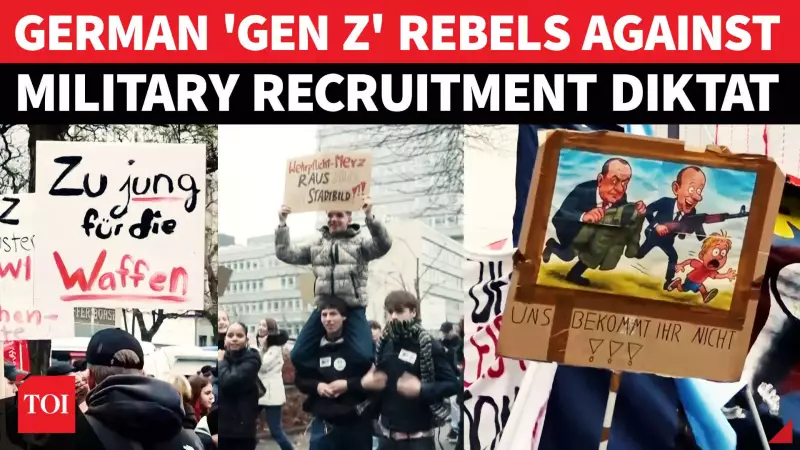
Germany is currently gripped by a massive wave of youth-led demonstrations, marking one of the largest such movements in recent years. Students across the nation are walking out of their classrooms and flooding the streets to voice their fierce opposition to the government's controversial proposal to bring back compulsory military service.
Nationwide Walkouts and Street Protests
The protests, which took place on December 6, 2025, saw thousands of young people mobilizing in major cities including Berlin, Munich, and Hamburg, as well as dozens of other urban centres. Carrying banners with slogans like "Recruitment of Death," the protesters accuse political leaders, notably Friedrich Merz and his government, of sacrificing their futures for what they see as political posturing and escalating tensions with Russia.
At the heart of their anger is the belief that the policy is fundamentally coercive and outdated. Young demonstrators argue that their voices are being completely ignored on a decision that directly impacts their lives and freedom. The government's move to begin screening 18-year-olds for potential service has acted as a catalyst, transforming simmering discontent into a full-fledged national movement.

Core Arguments of the Protest Movement
The protesting students present a multi-faceted case against the proposed conscription plan. They contend that in a modern democracy, forced service is an unacceptable infringement on personal liberty. Many also question the timing and necessity of the plan, linking it to rising geopolitical tensions rather than genuine national security needs.
The movement's momentum is visibly growing, paralleled by increasing public anger. Organisers have utilised social media to coordinate the walkouts and rallies, demonstrating a high level of mobilisation among Germany's student population. The scale of the protests indicates a significant generational clash over the country's future direction in security and social policy.
Political Repercussions and Next Steps
This widespread civil disobedience by the youth presents a major challenge for Chancellor Merz's administration. The government is pushing ahead with its plans, but the strength of the opposition could force a political recalculation. The protests highlight a deep divide between the political establishment's view of national duty and the younger generation's priorities for peace and self-determination.
As the screening process for young adults begins, the protest movement shows no signs of dissipating. Observers note that this could be a defining moment for German youth politics, potentially influencing not just military policy but also broader engagement in civic affairs. The coming weeks will be critical in determining whether the government moderates its approach or faces an even larger and more organised resistance.






