

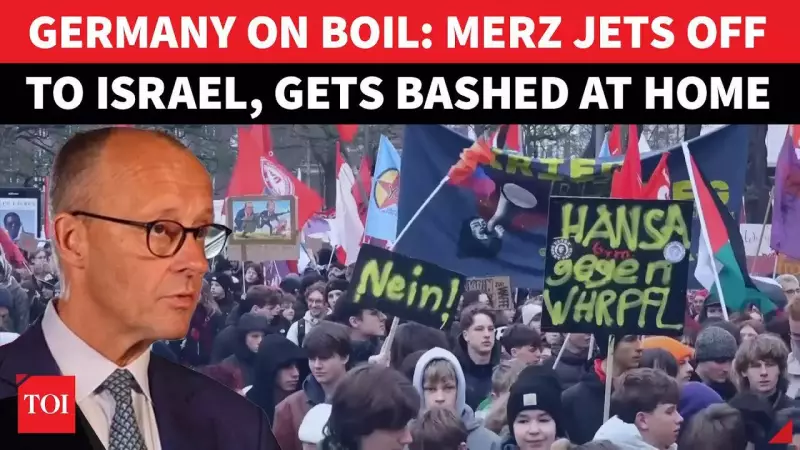
Germany is witnessing a wave of massive public unrest and political turmoil as its Chancellor, Friedrich Merz, embarked on a crucial diplomatic visit to Israel. The nationwide anger stems from the government's controversial decision to reintroduce mandatory military conscription, a move that has sparked fears of being drawn into a potential conflict with Russia.
Nationwide Fury Over Draft Reforms
The core of the crisis is a Bundestag decision that now requires all 18-year-old men in Germany to register for military service. This reform, aimed at expanding the Bundeswehr to meet NATO's defence goals, has triggered a fierce backlash, particularly from the youth. On December 7, 2025, protests erupted across Berlin and other cities, with students forming a significant part of the demonstrations.
The protestors have slammed the Merz-led government, accusing it of warmongering and pushing young people toward the frontline of a European conflict. The demonstrations have been notably backed by the Left-wing party BSW and its leader, Amira Mohamed Ali, who has emerged as a vocal critic of the Chancellor's policies.

Merz's Israel Trip Amid Domestic Firestorm
Even as his country boiled with dissent, Chancellor Friedrich Merz flew to Israel for a diplomatic reset. This timing has further fueled criticism from opposition figures. Amira Mohamed Ali publicly accused Merz of employing double standards on Israel, militarism, and war rhetoric.
Ali and other critics argue that the Chancellor's focus on international diplomacy and military expansion starkly contrasts with the growing domestic discontent over policies that could directly impact German families. The trip is seen by many protestors as a tone-deaf move during a severe internal political crisis.
A Deepening Political Crisis for Germany
The conscription issue has intensified Germany's existing political fractures. The protests highlight a significant divide between the government's national security strategy and a substantial portion of the public's appetite for military engagement. The expansion of the Bundeswehr, while a commitment to NATO, is being framed by opponents as an aggressive step that increases the risk of confrontation.
With leading political figures like Ali championing the protestors' cause, the situation poses a serious challenge to Chancellor Merz's authority. The government now faces the dual task of managing a crucial foreign relationship with Israel while containing a burgeoning domestic rebellion that questions the very foundation of its defence policy. The outcome of this standoff will likely shape Germany's political landscape and its role in European security for years to come.






