

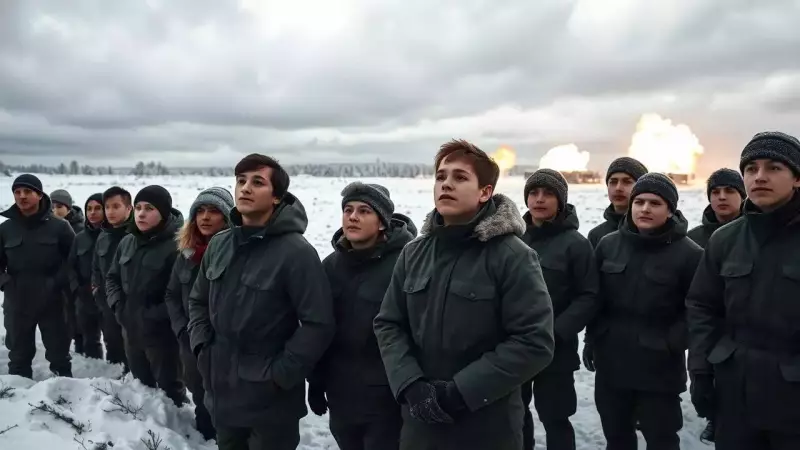
On a cold, snowy day at the Grafenwöhr military training ground, 16-year-old Carlotta experiences the thunderous roar of a Howitzer 2000 firing live ammunition, her ears protected by plugs. While her peers in Cologne attend warm classrooms, she stands in a Bavarian barracks uniform, part of a group of two dozen young men and women. This is her 'Discovery Day' with Tank Artillery Battalion 375 in Weiden, a short internship designed by the German military, or Bundeswehr, to attract new recruits.
The Voluntary Push: Incentives and Modernization
The scene with Carlotta is part of a larger, concerted effort by the Bundeswehr to address a critical personnel shortage. Defence Minister Boris Pistorius is championing a voluntary model through the newly passed 'Military Service Modernization Act'. The law, approved by the Bundestag, aims to motivate young Germans to join without resorting to full conscription, a move opposed by Pistorius's Social Democratic Party (SPD).
A key incentive is significantly better pay. Starting in early 2026, new recruits will earn a pre-tax monthly wage of €2,600 (approx. $3,000) for a minimum six-month service. Those committing to at least twelve months will also receive a subsidy for driving lessons. The Bundeswehr's goal is ambitious: recruit 80,000 new soldiers by 2035 and expand the standing army from under 182,000 to 260,000 troops, a commitment to NATO in light of the perceived threat from Russia. An additional 200,000 reservists are also planned.

Compulsory Steps and Rising Opposition
While service remains voluntary for now, the law introduces new obligations for young men. From early 2026, all 18-year-old men will receive a mandatory questionnaire assessing their willingness, fitness, and education for service. For women, it remains optional. By mid-2027, men born in 2008 or later must attend a compulsory fitness test to determine draft eligibility in a conflict.
These measures, especially the mandatory medical exam, are highly controversial. Critics view them as a slippery slope back to full conscription. This fear has ignited youth protests. On the day the law passed, students in many German cities rallied under the banner 'school strike against conscription'. "We don't want to be locked up in barracks for half a year... and taught to kill," stated the organizers. Leo Reinemann, a student co-organizer in Koblenz, told SWR, "We feel neglected as a generation."
Simultaneously, the number of Germans filing as conscientious objectors has reached a new high since conscription was suspended in 2011, with over 3,000 applications received by the end of October this year.
A Political Compromise and an Uncertain Future
The new law is a political compromise after months of coalition dispute. A proposed lottery system for selection was ultimately rejected following public outrage. The final model is a 'needs-based conscription' framework, where the Bundestag can decide to draft a portion of an age group if volunteers are insufficient. The Defence Ministry must now report recruitment progress to parliament every six months.
For young Germans like Carlotta, the choice is currently hers. She considers joining for a few years voluntarily but firmly rejects forced conscription. "You shouldn't force anything on people. It's much better to join voluntarily... because then you lose your motivation," she told DW. As Germany navigates this delicate balance between national security needs and the will of its youth, the success of this voluntary incentive model will be closely watched in the coming years.






