

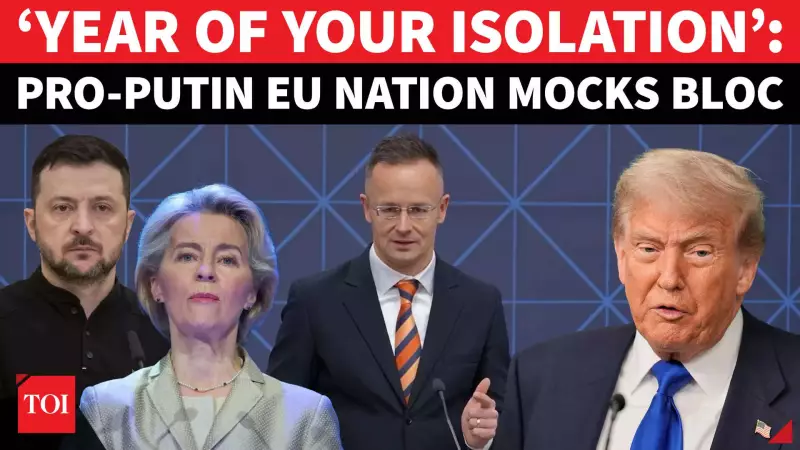
In a dramatic and sharply worded accusation, Hungary has launched a blistering attack on the European Union's leadership, claiming it is actively working to derail peace efforts in the ongoing Ukraine conflict. The charges were levelled by Hungarian Foreign Minister Peter Szijjarto, who stated that Brussels is operating against Kyiv's own interests.
Europeans 'Calling The Shots' In Ukraine, Says Szijjarto
Speaking at a press conference in Vienna on December 5, 2025, during a meeting of the OSCE Ministerial Council, Szijjarto presented a stark view of the diplomatic landscape. He asserted that while the U.S. President remains fully committed to achieving peace, and Russia has expressed readiness to negotiate, the mainstream political forces within Europe are determined to sabotage any such negotiations.
The minister made the explosive allegation that Ukraine's core positions and red lines in the conflict are not being set by its own government in Kyiv. Instead, he claimed, they are being dictated by various European capitals. This external pressure, according to Szijjarto, is forcing Ukraine into a prolonged and confrontational stance against Moscow, contrary to its potential best interests.

Budapest Positions Itself as Peace Venue Amidst Tensions
Amidst these serious allegations, the Hungarian diplomat reiterated his country's offer to host crucial peace talks. Szijjarto confirmed that Budapest remains the preferred venue for any potential future peace summit, but only on the condition that preliminary agreements are successfully reached between the warring parties. This statement reinforces Hungary's ongoing strategy to position itself as a neutral diplomatic hub in the heart of Europe, often at odds with the broader EU consensus on supporting Ukraine militarily.
A Deepening Rift Within the European Bloc
This public condemnation from a sitting EU member state's foreign minister highlights the significant and growing fractures within the European Union regarding the strategy towards the Russia-Ukraine war. Hungary, under Prime Minister Viktor Orban, has consistently maintained closer ties with Moscow compared to its EU and NATO allies and has frequently criticized the bloc's approach of supplying weapons and imposing sanctions.
Szijjarto's comments in Vienna represent one of the most direct accusations to date, framing the EU not as a protector of Ukrainian sovereignty but as an obstacle to peace. The remarks are likely to intensify diplomatic friction within the union, raising questions about unity and strategic direction as the conflict continues with no clear end in sight.






