

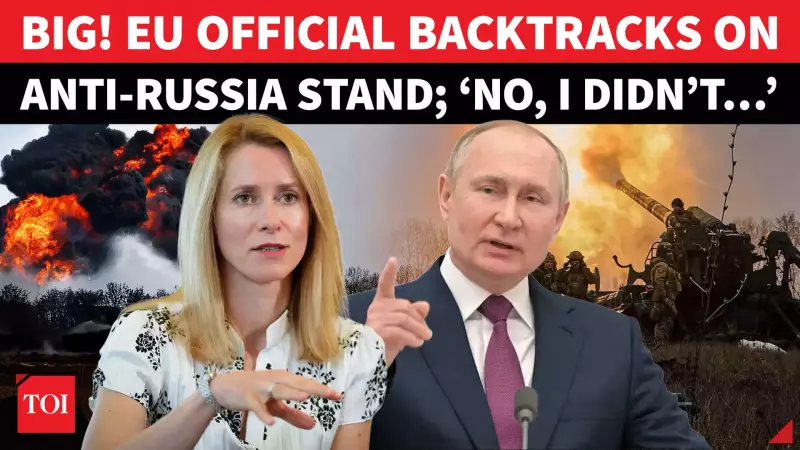
In a significant diplomatic shift, the European Union's top diplomat, Kaja Kallas, has walked back her earlier controversial remarks about imposing constraints on the size of the Russian military. The reversal came after her initial comments faced sharp criticism and significant diplomatic pushback from various quarters.
From Hardline to Softened Stance
Kallas, known for her strong stance on Russia, initially made explosive remarks suggesting that limits should be placed on the size of the Russian army to ensure security for Estonia and Europe. However, when confronted by a journalist on December 1, 2025, she notably softened her position. The journalist specifically asked if she had reflected on her comments and what size Russia's army should be to guarantee European security.
In her revised statement, Kallas indicated that Europe should not dictate the military dimensions of another sovereign nation. This marked a clear departure from her earlier, more confrontational tone, acknowledging the complexities of international sovereignty and diplomacy.

The Backlash and Diplomatic Recalculation
The initial proposal from the EU diplomat triggered immediate and widespread criticism. Analysts suggest the pushback likely came not only from expected international channels but also from within European diplomatic circles concerned about escalating tensions and the precedent of dictating another country's defense capabilities.
Kallas's U-turn highlights the delicate balancing act in EU foreign policy, especially concerning relations with Russia. It underscores how public statements from high-level officials can be swiftly recalibrated following internal and external diplomatic feedback. The episode serves as a reminder of the rapidly evolving and often reactive nature of geopolitical discourse.
Implications for EU-Russia Relations
While Kallas's retracted comments may ease immediate diplomatic friction, the underlying tensions remain. The incident reflects the ongoing challenges Europe faces in formulating a cohesive and effective strategy towards Russia, balancing deterrence with pragmatic diplomacy.
The swift walk-back also demonstrates the power of diplomatic channels and public scrutiny in moderating foreign policy rhetoric. For now, the EU's position, as clarified by Kallas, steers away from direct mandates on Russian military capacity, focusing instead on broader security frameworks and alliances.






