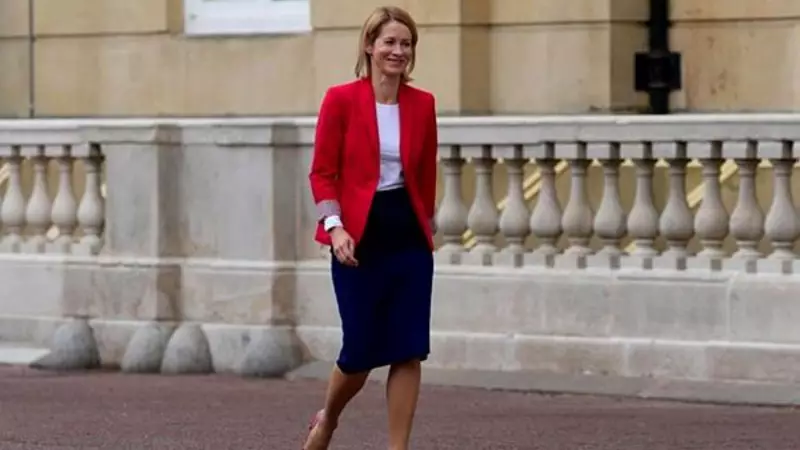
European Union foreign policy chief Kaja Kallas has publicly addressed sharp criticism from the United States, asserting that the transatlantic partnership remains fundamentally strong. Her comments came in response to a newly published US National Security Strategy that questioned Europe's democratic credentials and strategic confidence.
US Strategy Delivers Blunt Assessment of Europe
The catalyst for this diplomatic exchange was the new US National Security Strategy, posted on the White House website overnight between Thursday and Friday, December 5-6, 2024. The document presented a stark view of Europe, labelling the European Union as anti-democratic and characterizing the continent as lacking in self-confidence.
It went further, suggesting Europe faces a risk of "civilisational erasure" and could potentially lose its standing as a reliable American ally. The strategy outlined a US goal to help Europe correct its current political and strategic trajectory.

Kallas Acknowledges Critique, Calls for European Confidence
Speaking on a panel at the Doha Forum in Qatar on Saturday, December 7, 2024, Kallas offered a measured response. She acknowledged the criticism, stating that some of it held truth, particularly regarding Europe's posture towards Russia.
"There's a lot of criticism, but I think some of it is also true, if you look at Europe, it has been underestimating its own power towards Russia," Kallas said. She emphasized the need for a shift in mindset, declaring, "We should be more self-confident."
"US is Still Our Biggest Ally": Reaffirming the Partnership
Despite the pointed remarks in the US strategy document, Kallas was unequivocal in reaffirming the core alliance. "The US is still our biggest ally," she stated clearly during the forum discussion.
She recognized that the two powers have not always agreed on every issue but stressed the overriding principle of unity. "I think we haven't always seen eye to eye on different topics, but I think the overall principle is still there. We are the biggest allies and we should stick together," Kallas concluded, underscoring the enduring importance of the transatlantic bond even in times of diplomatic friction.