

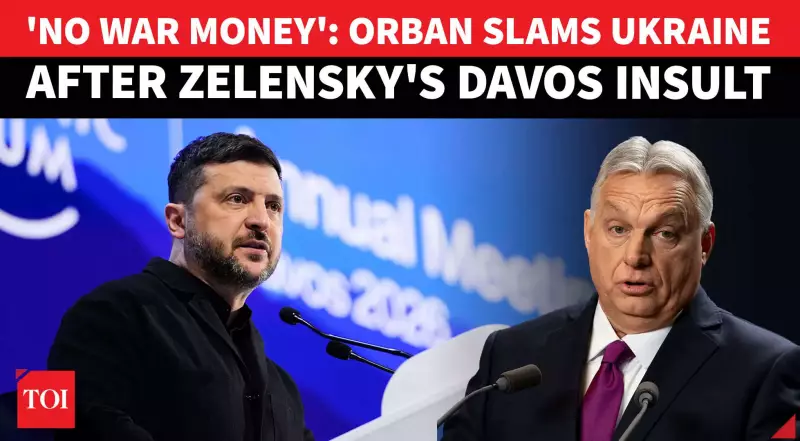
Hungarian Leader Viktor Orbán Rejects Ukraine Aid in Blistering Rebuke of President Zelensky
Europe's fragile unity regarding the ongoing conflict in Ukraine is facing a significant new challenge. Hungarian Prime Minister Viktor Orbán has openly refused to provide further assistance to Kyiv, launching a sharp public criticism of Ukrainian President Volodymyr Zelensky. This development comes as Hungary approaches a crucial election period, adding political pressure to the already strained relations within the European Union.
Orbán's Public Rebuke and Rejection of Support
In a strongly worded statement, Orbán made it clear that Hungary would not contribute "a single penny" to Ukraine's war efforts against Russia. The Hungarian leader framed this decision as a choice between pursuing peace or escalating the conflict further. This position directly contradicts the broader NATO and EU consensus on supporting Ukraine, highlighting growing divisions among member states.
The clash follows President Zelensky's recent remarks at the World Economic Forum in Davos, which went viral and drew mixed reactions from European leaders. Orbán's criticism specifically targets Zelensky's approach to the war, suggesting that Ukraine's leadership bears responsibility for the prolonged conflict.

Political Context: Hungarian Elections and EU Fractures
This diplomatic confrontation occurs at a politically sensitive time for Hungary, which is heading toward high-stakes national elections. With the Hungarian economy experiencing strain and voters preparing to cast their ballots, Orbán appears to be using the Ukraine issue to rally domestic support by positioning himself as a peace advocate.
The situation exposes deepening political fractures within the European Union regarding how to handle the Russia-Ukraine war. While most EU nations continue to support Ukraine militarily and financially, Hungary's stance represents a significant departure from this unified approach. This divergence threatens to undermine the collective European response to Russian aggression.
Broader Implications for NATO and European Security
Orbán's refusal to aid Ukraine raises important questions about NATO's cohesion and the future of European security architecture. As a NATO member, Hungary's position creates tension within the alliance, particularly with countries that are more directly threatened by Russian expansionism.
The Hungarian leader's comments also reflect broader debates within Europe about the costs of supporting Ukraine versus pursuing diplomatic solutions. With economic pressures mounting across the continent and war fatigue setting in among some populations, Orbán's stance may resonate with voters who are concerned about the financial and human costs of prolonged conflict.
This development underscores the complex political dynamics shaping Europe's response to the Ukraine war, where domestic political considerations increasingly intersect with international security commitments. The outcome of Hungary's upcoming election will likely influence whether this divergence from European consensus becomes more pronounced or is eventually reconciled.

