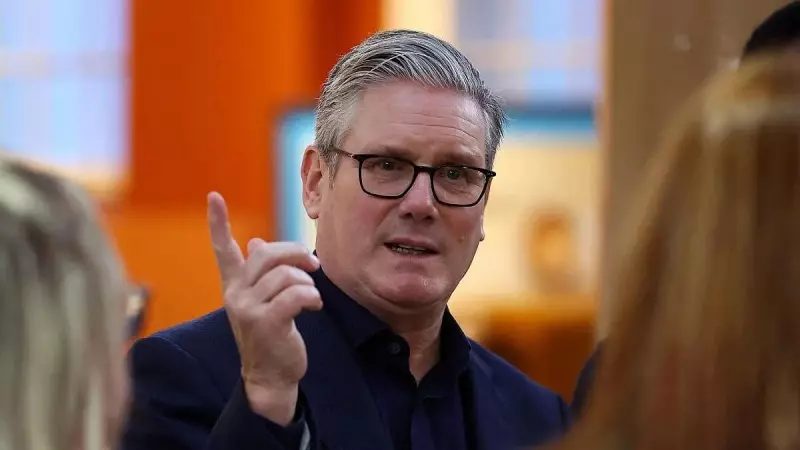
In a significant political statement, Britain's Labour Party leader Keir Starmer has advocated for the United Kingdom to pursue a much closer economic relationship with the European Union. Starmer emphasised that the current state of relations between London and Brussels is more robust than it has been for the past ten years.
A Decade After the Brexit Vote: A Call for Realignment
Starmer made these comments during an interview with the BBC's Laura Kuenssberg. His remarks come nearly a decade after the historic 2016 referendum, where Britons narrowly voted to leave the EU. This pivotal event, known as Brexit, set the UK on a complex path of political and economic renegotiation. Starmer's position signals a potential major shift in the UK's post-Brexit strategy should his party come to power.
Starmer's Vision for a "Stronger" Future with Europe
The Labour leader did not call for rejoining the EU, but explicitly argued for seeking closer alignment with the EU single market. This move is seen as an effort to reduce trade barriers and ease economic friction that has arisen since the UK's formal departure from the bloc. Starmer told the BBC that the foundation for a better relationship is now stronger than it has been since before the referendum, suggesting a window of opportunity for improved cooperation.

Implications for Trade and Geopolitics
This proposed policy direction could have wide-ranging consequences. For businesses, closer single market alignment could mean:
- Simpler trade rules and reduced customs checks.
- Greater regulatory harmony for goods and services.
- Enhanced cooperation on standards and security.
Politically, it marks a clear distinction from the more hardline Brexit stance of some Conservative governments. Starmer's comments, made in early January 2026, are likely to frame the upcoming political debate in the UK, focusing on the practical realities of the UK's relationship with its largest trading partner. The call for deeper ties reflects an ongoing reassessment of Brexit's long-term economic impact.
As the UK continues to navigate its post-Brexit identity, Starmer's advocacy for a tighter bond with the European single market sets the stage for a critical discussion on the country's future economic and foreign policy trajectory.