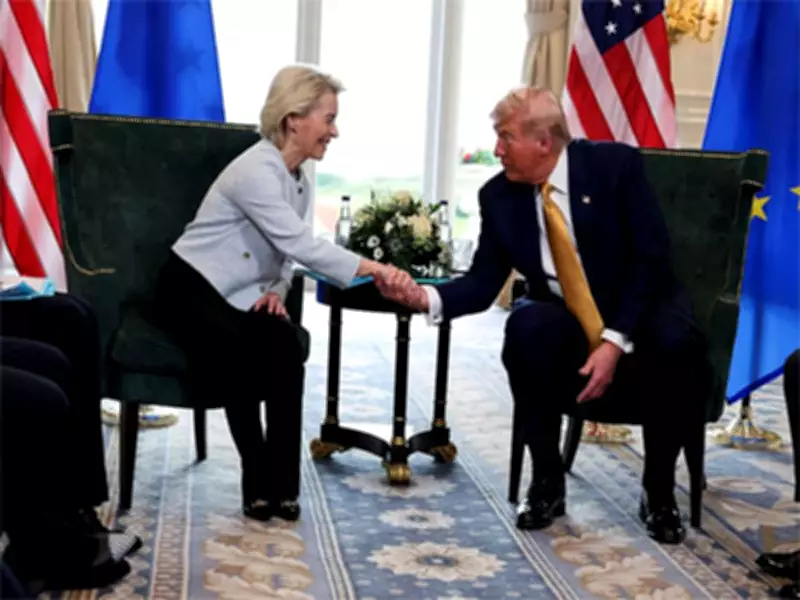
President Donald Trump and European Commission President Ursula von der Leyen held a telephone conversation on Tuesday, during which both leaders expressed a unified stance on preventing Iran from acquiring nuclear weapons. The call, which lasted approximately 30 minutes, focused on the escalating tensions in the Middle East and the need for a coordinated international response.
Shared Concerns Over Iran's Nuclear Program
According to a White House readout, Trump and von der Leyen "discussed the importance of ensuring that Iran never develops a nuclear weapon." The leaders also touched on recent attacks on oil facilities in Saudi Arabia, which have been blamed on Iran, and the need to maintain stability in the region. The European Commission echoed the sentiment, stating that both sides are "united in their determination to prevent Iran from possessing nuclear weapons."
Diplomatic Efforts and Sanctions
The conversation comes amid heightened tensions following the U.S. withdrawal from the 2015 Iran nuclear deal, officially known as the Joint Comprehensive Plan of Action (JCPOA). The Trump administration has pursued a policy of maximum pressure on Iran, imposing crippling economic sanctions. European nations, while critical of the U.S. withdrawal, have also expressed concerns over Iran's nuclear activities. The call signals a potential alignment in approach, though differences remain over how to engage with Tehran.

Both leaders agreed to continue consultations and coordinate efforts with other international partners. The readout noted that Trump and von der Leyen "committed to working together to address the full range of challenges posed by Iran." This includes not only nuclear non-proliferation but also Iran's ballistic missile program and its support for proxy groups in the region.
Transatlantic Unity
The phone call underscores a rare moment of transatlantic unity on a key foreign policy issue. Despite disagreements on trade, climate change, and other matters, the U.S. and EU share a common goal of preventing a nuclear-armed Iran. The call also comes as European leaders seek to salvage the JCPOA, which they view as crucial for regional security. However, the Trump administration has made clear that it seeks a new deal that addresses broader concerns, including Iran's missile program and regional activities.
Analysts suggest that the call may pave the way for a more coordinated diplomatic push, though significant hurdles remain. Iran has repeatedly stated that it will not negotiate under pressure and has gradually reduced its compliance with the nuclear deal. The situation remains fluid, with both sides signaling a willingness to engage but also preparing for potential escalation.