

Asian Markets Begin February on a Weak Foot Amid Global Uncertainty
Asian stock markets commenced the month of February on a decidedly weaker note, with shares falling across major indices and precious metals extending their recent losses. This cautious opening followed a volatile end to the previous week on Wall Street, setting a somber tone for global financial markets.
Regional Market Performance Shows Widespread Declines
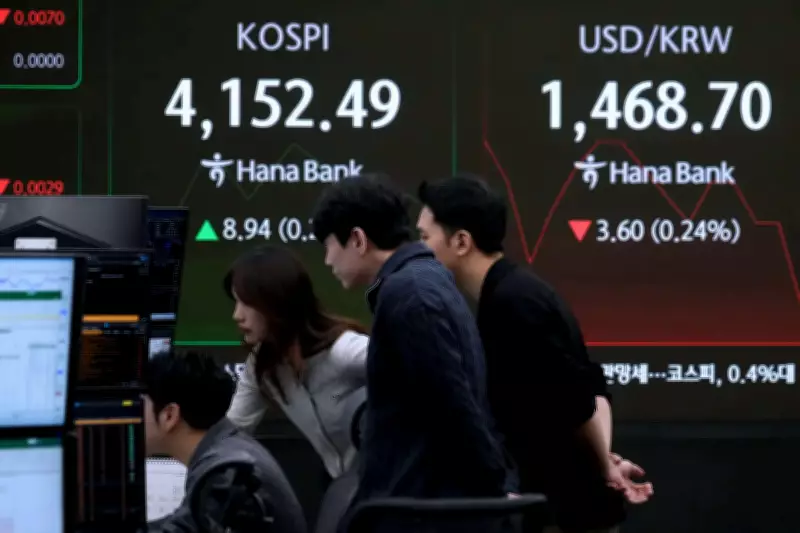
In Hong Kong, the Hang Seng Index (HSI) experienced significant pressure, dropping 554 points or 2% to reach 26,832. Mainland China markets also faced downward momentum, with the Shanghai Composite falling 1.1% and the Shenzhen Component declining 1.2% respectively. The weakness was particularly pronounced in South Korea, where the Kospi index plunged 3.7% or 194 points to settle at 5,029.
Japan's Nikkei 225 provided a rare exception to the regional trend, managing to add 99 points or 0.19% to reach 53,422 by 8:50 am IST. However, this modest gain stood in stark contrast to the broader market weakness across the Asian region.

Precious Metals Accelerate Their Downward Slide
The losses in precious metals markets accelerated during early Asian trading. Gold fell more than 2%, extending its significant slide after registering its biggest one-day drop in over a decade on Friday. Silver continued its decline as well, coming off a record 26% plunge on the final trading day of January.
These dramatic moves in precious metals reflected shifting investor sentiment and changing expectations regarding monetary policy and inflation dynamics in global markets.
Currency and Cryptocurrency Movements
In currency markets, the Japanese yen slipped against a strengthening US dollar, which has been gaining momentum amid reassessments of the Federal Reserve's future policy direction. Cryptocurrencies showed limited signs of recovery, with Bitcoin edging higher in early Asian trading after falling below $76,000 during thin weekend trading.
The cryptocurrency's movements returned it to levels last seen in the aftermath of former President Trump's "Liberation Day" tariffs last year, highlighting the ongoing sensitivity of digital assets to broader market sentiment and geopolitical developments.
Broader Market Context and Upcoming Events
The broad market moves reflected generally muted sentiment ahead of a heavy week for global markets. Key events on the horizon include interest-rate decisions from central banks in Europe and the United Kingdom, the release of important US employment data, and a large number of corporate earnings announcements.
On Friday, investors globally had already repositioned their portfolios to scale back expectations of policy easing under a Federal Reserve potentially led by Kevin Warsh. The strength in the US dollar last week was driven not only by turmoil in gold and silver markets but also by these reassessments of the Federal Reserve's future policy direction.
Energy Markets and Political Developments
In energy markets, OPEC+ confirmed it would keep oil output unchanged in March, completing the final stage of a three-month supply freeze. This decision came despite crude prices touching a four-month high amid expectations of a possible US strike against Iran, highlighting the complex geopolitical factors influencing energy markets.
Meanwhile, in the United States, the federal government entered a partial shutdown on Saturday as lawmakers awaited House approval of a funding agreement reached by former President Trump with Democrats. This development followed nationwide outrage over the killing of a US citizen in Minneapolis by Border Patrol agents, adding another layer of uncertainty to the global economic landscape.
The combination of these factors created a challenging environment for Asian markets as they opened the new month, with investors closely monitoring developments across multiple fronts including monetary policy, geopolitical tensions, and domestic political developments in key economies.






