

BlackRock CEO Issues Stark Warning on Oil Prices and Global Recession Amid Escalating Conflict
As tensions between Iran, Israel, and the United States continue to escalate, now stretching beyond three weeks, global oil markets are experiencing sharp volatility in response to military developments and diplomatic signals. The United States has deployed over 4,000 Marines to the region and is considering further troop movements, including from the Army's 82nd Airborne Division, even as ceasefire talks surface. This conflict is critically shaping the direction of oil markets, with significant implications for the global economy.
Larry Fink's Dire Prediction for Oil Markets and Economic Stability
Larry Fink, chairman and chief executive of BlackRock, the world's largest money manager with approximately $14 trillion in assets, has issued a grave warning. In an interview on the BBC's Big Boss Interview podcast, Fink stated that if Iran continues to threaten energy supply routes even after the war ends, oil prices could surge to $150 per barrel, potentially pushing the global economy into a recession. He emphasized that such a scenario would represent "a probably stark and steep recession."
Fink explained that the final outcome of the war remains uncertain, but oil prices will hinge on post-conflict developments. If the conflict is resolved and Iran is reintegrated into the international community, prices could fall below the pre-war level of around $70 per barrel. However, he cautioned that a ceasefire alone is insufficient. "If there is a cessation of war, and yet Iran remains a threat, a threat to trade, a threat to the Strait of Hormuz, a threat to this peaceful coexistence of the GCC region, then I would argue that we could have years of above US$100 closer to US$150 oil which has profound implications in the economy," Fink said.

Supply Disruption at a Critical Chokepoint: The Strait of Hormuz
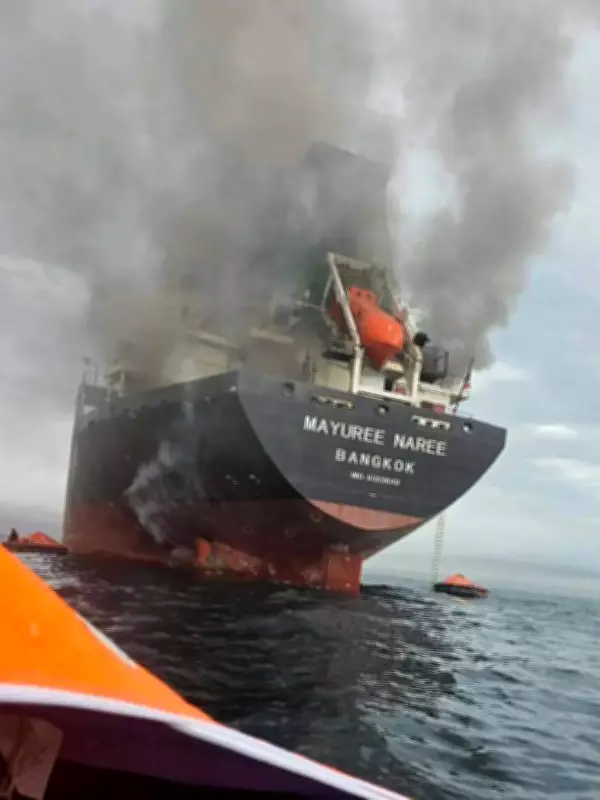
The conflict has nearly halted shipments of oil and liquefied natural gas through the Strait of Hormuz, a narrow passage that typically carries about one-fifth of the world's gas and crude supply. This disruption has drawn concern from the International Energy Agency, which described the situation as the "largest supply disruption in the history of the global oil market." Brent crude prices have climbed to their highest levels in nearly four years, nearing $120 a barrel at one point, though they fell about 4% to around $98 after reports of a US ceasefire proposal.
Iran has strongly rejected claims by Donald Trump that negotiations are underway, with its top military command mocking Washington's statements. A military spokesperson dismissed the suggestion outright, stating, "Our first and last word... has been, is, and will remain: someone like us will never come to terms with someone like you. Not now, and not ever."
Infrastructure Damage and Delayed Recovery Prolong Global Supply Chain Disruptions
Even if hostilities ease, energy supply is unlikely to rebound quickly. International Energy Agency Executive Director Fatih Birol reported that more than 40 energy assets across nine countries in the Middle East have been "severely or very severely" damaged, including oil fields, refineries, and pipelines that cannot be restored immediately. This destruction will prolong disruptions to global supply chains post-conflict.
Birol compared the current situation to past crises, noting, "The effect of the current disruptions is equivalent to the two major oil crises in the 1970s and the 2022 natural gas crisis after Russia invaded Ukraine, all put together." He added that the impact extends beyond oil and gas, affecting vital arteries of the global economy such as petrochemicals, fertilizers, sulfur, and helium, with serious consequences for economic stability.
Impact on Households and the Push Towards Alternative Energy Sources
Fink warned that higher energy prices would have a direct and uneven impact on consumers, particularly in import-dependent countries. "Rising energy prices is a very regressive tax. It affects the poor more than the wealthy," he said. In the UK, for example, rising oil and gas costs are expected to increase household bills in the coming months, prompting calls for expanded domestic production to reduce exposure to external shocks.

Conversely, Fink suggested that sustained high prices could accelerate the shift towards alternative energy sources. "If oil prices rise to $150 you would have so many countries moving so rapidly towards solar and maybe even wind," he said, advocating for aggressive moves towards alternatives while utilizing existing resources.
As the conflict continues with US troop deployments and diplomatic stalemates, the warnings from financial leaders like Larry Fink underscore the profound economic risks at stake, with oil markets serving as a critical barometer for global stability.





